As the Federal Executive Council approves the full reconstruction of a colonial-era crossing and greenlights a 68-kilometre rail spine through Lekki, the city faces its most disruptive — and potentially most transformative — infrastructure moment in a generation.
By Nkanu Egbe
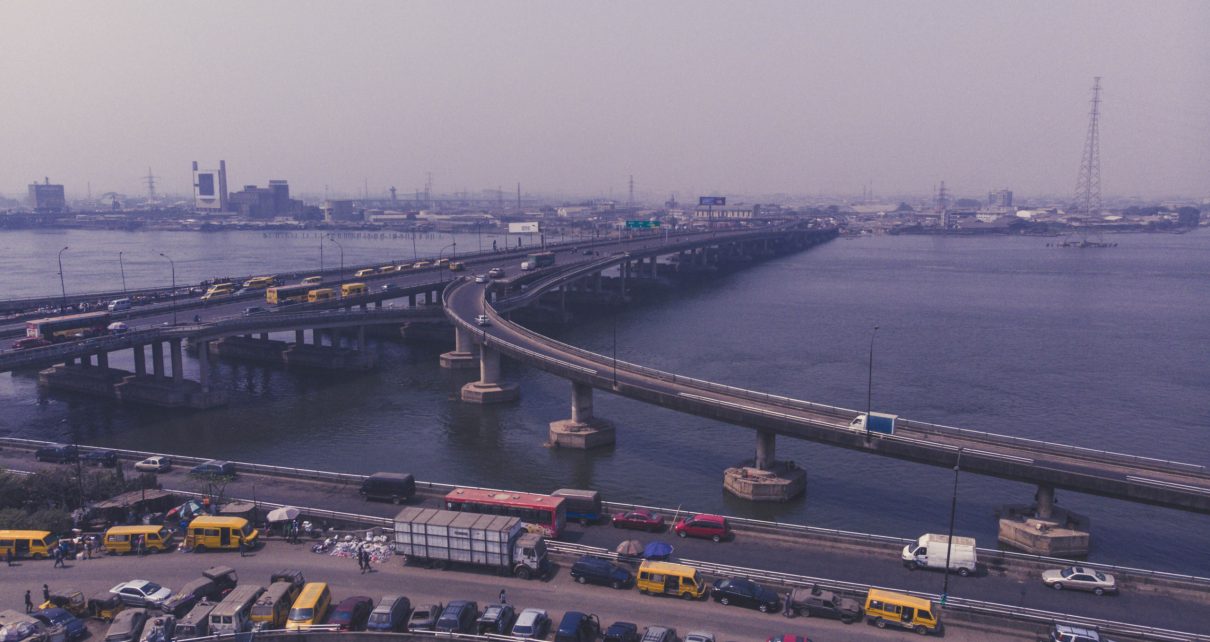
For more than a century, the Carter Bridge has borne the weight of Lagos — literally and economically. Built departmentally between 1896 and 1901 by the British colonial government and named after Sir Gilbert Thomas Carter, the Governor of Lagos Colony, it was the city’s first permanent road link across the Lagos Lagoon, connecting Iddo on the mainland to the teeming markets of Idumota on the Island. When it was completed, motor transport had not yet arrived in Lagos. The bridge’s original width — barely twenty-and-a-half feet between handrails — was already straining under bicycles, pedestrians, cows, and carts before the first decade of the twentieth century was out. It was reconstructed in 1931, redesigned and rebuilt again in the late 1970s, and has been patched, propped, and pleaded with ever since.
That era ended on Thursday, April 30, 2026. At a Federal Executive Council meeting chaired by President Bola Tinubu at the Presidential Villa in Abuja, Works Minister David Umahi announced that the government had formally approved the complete demolition and reconstruction of Carter Bridge at a contract sum of ₦548.98 billion — the single most expensive bridge project in Nigerian history. At the same sitting, Finance Minister and Coordinating Minister of the Economy Taiwo Oyedele disclosed FEC approval of $2.99 billion for three transformative rail projects, anchored by the Lagos Green Line, a 68-kilometre metro corridor from Marina to the Lekki Free Trade Zone.
Together, the two decisions represent the largest single-day infrastructure commitment to Lagos’s mobility in living memory — and the most consequential test of whether Nigeria can execute mega-projects at the scale its biggest city demands.
Key Figures At A Glance
| Carter Bridge contract | ₦548.98 billion — awarded to China Communications Construction Company (CCCC) |
| Green Line Rail (Phase 1A) | $2.99 billion (shared with Kano Metro and Kaduna Light Rail) — contractor: China Harbour Engineering Company (CHEC) |
| Design consultancy | ₦5.6 billion to Advanced Engineering Consultants for detailed lagoon surveys |
| New bridge length | 1.93 km (up from 1.525 km) — plus integrated flyover ramp |
| Navigational waterway | 105 metres × 2 channels — accommodating larger commercial vessels |
| Green Line route | Marina → Victoria Island → Lekki Phase 1 → Ajah → Lekki Free Trade Zone (17 planned stations) |
| Green Line capacity | 500,000 passengers per day at inception; up to 1 million over time |
| Competing bidders (Carter) | Julius Berger, CCECC, CBC, China Harbour High Tech |
| Third Mainland Bridge repairs | ₦24.89 billion for underwater elements — Julius Berger — also approved at same FEC meeting |
A Structure Beyond Saving
The formal verdict on Carter Bridge had been building for over a decade. Technical assessments in 2013 and 2019 raised escalating alarm. What began under the current administration as a routine rehabilitation scoped at around ₦25 billion — covering deck resurfacing and preliminary underwater works — became, upon further investigation by Julius Berger Nigeria and marine survey specialists Mamba Divers, a far grimmer diagnosis. The underwater piles and pile caps, corroded by decades of saltwater exposure and compressed under traffic loads the original engineers could never have imagined, had deteriorated in what Umahi described as a “geometrical progression.”
The minister left no ambiguity when he addressed State House correspondents: “We convened a stakeholders’ engagement, and all the technical experts — all over the country, and even internationally — all agreed that we could not redeem Carter Bridge, and it has to be completely demolished and rebuilt.” The consensus was unanimous. Partial repair, the engineering community concluded, would be throwing good money after bad into a foundation that could no longer be saved.
“All the technical experts — all over the country, and even internationally — all agreed that we could not redeem Carter Bridge.” — Works Minister David Umahi
The contract, following a rigorous competitive tender involving Julius Berger, CCECC, CBC, and China Harbour High Tech, was awarded to the China Communications Construction Company (CCCC). The winning bid’s alignment with the administration’s preference for reinforced concrete — more expensive upfront but significantly more durable and resistant to Lagos Lagoon’s corrosive saline environment — was a decisive factor, Umahi indicated.
The new structure will be substantially larger than its predecessor. The total span extends from 1.525 kilometres to 1.93 kilometres, incorporating a flyover ramp explicitly designed to eliminate the notorious bottleneck where bridge traffic meets the surface roads of both Island and Mainland. Two navigational waterways, each 105 metres wide, will run beneath — a meaningful upgrade for commercial marine traffic moving through the lagoon. Critically, ₦5.6 billion has been separately approved for Advanced Engineering Consultants to complete detailed lagoon surveys before demolition begins, an acknowledgement of the complex geotechnical risks posed by the saturated, low-bearing-capacity clays beneath the Lagos Lagoon that have challenged engineers since the bridge’s original iron piles were first driven in 1901.
The Green Line: Lagos Finally Gets Its Eastern Rail Spine
While the Carter Bridge story dominates the headlines, the Green Line Rail approval may ultimately prove the more consequential of Thursday’s decisions for Lagos’ long-term economic geography. The project — Phase 1A of a long-planned metropolitan rail expansion — will run 68 kilometres from Marina on Lagos Island through Victoria Island, Lekki Phases 1 and 2, Chevron, Ajah, Sangotedo, and onward to the Lekki Free Trade Zone, with 17 stations punctuating what Governor Babajide Sanwo-Olu, who welcomed the approval via his official X account, called “one of the most anticipated components of the Lagos metropolitan rail network.”
The numbers are striking. At inception, the line is projected to carry 500,000 passengers daily, with capacity to scale toward one million. At full throughput, the system will move up to 35,000 passengers per hour in each direction — a figure that would rival metro systems in comparable emerging-market cities. A journey that currently consumes two or more hours in the Lekki-Epe Expressway crawl could, once operational, take between 15 and 30 minutes. For a corridor that houses some of the highest concentrations of commercial and residential activity in sub-Saharan Africa, the economic implications are difficult to overstate.
The Green Line completes a critical arc in Lagos’ evolving multi-modal transit web. At Marina, it will interchange with the Blue Line (Marina to Mile 2, already operational) and the Red Line (Agbado to Oyingbo). The eventual integration of all three lines — plus the proposed Purple Line and the Lekki Airport connection flagged in planning documents — would give Lagos a genuine rapid transit network for the first time in its history as a megacity. Finance is structured through the Ministry of Finance Incorporated (MOFI) as project sponsor, with China Harbour Engineering Company (CHEC) leading design, financing, and construction. An MoU between CHEC and MOFI was signed as far back as September 2024; Thursday’s FEC approval formalises the contractual commitment.
Minister Oyedele framed the three-city package — Lagos, Kano, and Kaduna — in explicitly economic terms: “These three cities are very important and critical. All cities are important, but this is where you have your 10 per cent effort yielding 90 per cent results.” It is a rare moment of candour about the uneven geography of Nigerian infrastructure investment, and one that Lagos advocates will note with satisfaction.
The Pain Horizon: What 2027 Means for Business
The approvals are welcome. The construction timeline is not. Works Minister Umahi’s phased roadmap projects demolition and ground-breaking beginning in the first half of 2027, with the full rebuild expected to take between 36 and 48 months from that point — meaning Lagosians should not expect a new Carter Bridge before 2030 at the earliest, and likely later if the project encounters the delays that have historically plagued Nigerian infrastructure works.
For businesses in Ebute Metta, Idumota, Balogun, and Lagos Island’s commercial core, that timeline represents a sustained logistical crisis. Carter Bridge is not merely a commuter crossing; it is the artery through which goods flow from mainland rail and road depots into the Island’s market ecosystem. Trucks that cannot cross Carter Bridge will be forced onto Third Mainland and Eko Bridge — already congested arteries — adding time, fuel costs, and supply uncertainty to every supply chain that depends on Island-Mainland movement.
For businesses in Idumota, Balogun, and Lagos Island’s commercial core, that timeline represents a sustained logistical crisis — not months, but years.
LAMATA has been tasked with developing diversion maps ahead of Q4 2026 stakeholder engagement. Blue Line, ferry services, and Third Mainland will bear the redistributed load. The overlap of the heaviest construction phase with the 2027 electoral cycle adds a layer of political pressure that could complicate both traffic management decisions and construction momentum.
SMEs with high exposure to the Idumota-Ebute Metta corridor should begin contingency planning now. Practical responses include forward-stocking of slow-moving inventory before demolition begins, negotiating route and supplier flexibility where possible, and engaging early with LAMATA’s diversion communications as they are released. Businesses with the capital to invest in warehouse space closer to their end markets — on the Island side — should be assessing that option. Those in manufacturing and logistics who can absorb the pain of 2027-2029 may find the post-construction landscape of faster, more predictable supply chains well worth the wait.
Project Roadmap: Phase by Phase
| Phase | Task Name | 2026 (Q2-Q4) | 2027 | 2028 | 2029 | 2030 |
| I | Technical Design & Surveys | ██████ | ||||
| II | Stakeholder & Diversion Prep | ░░░░██ | ||||
| III | Demolition & Site Clearance | ████ | ||||
| IV | Piling & Substructure | ████████ | ||||
| V | Superstructure & Paving | ████████ | ||||
| VI | Flyover Integration & Opening | ████ |
Phase I spans Q2–Q4 2026. Phases II–VI run from Q4 2026 through estimated completion in 2030. Green Line Phase 1A construction timeline to be confirmed following detailed design.
Long-Term Outlook: The Productivity Dividend
Strip away the disruption and what emerges is a structural reordering of how Lagos moves and where value concentrates. The elimination of the Carter Bridge bottleneck — via the new 1.93-kilometre span and integrated flyover — addresses one of the oldest and most costly chokepoints in Nigerian commerce. Independent studies of comparable urban infrastructure upgrades in African megacities have consistently found that reduced commute times translate into measurable gains in labour productivity, with outsized effects in high-density commercial zones like those surrounding Idumota.
The Green Line’s impact on Lekki real estate is already being priced in by developers tracking the Blue Line effect. Rail-adjacent property values along the Marina-Mile 2 corridor rose materially following Blue Line announcements and construction milestones. The Lekki-Ajah axis — already Lagos’s most active residential development corridor — sits directly in the Green Line’s path. For investors with a multi-year horizon, the case for strategic positioning in rail-adjacent real estate along the 68-kilometre corridor is credible, though it should be assessed against the execution risk that has historically accompanied large Nigerian infrastructure projects.
Thursday’s FEC session also approved ₦24.89 billion for critical underwater repairs to the Third Mainland Bridge, to be handled by Julius Berger — a separate but related commitment to maintaining the structural integrity of Lagos’s other primary mainland-island crossings during what will be an unusually high-pressure period for the city’s bridge network.
Taken together, the Carter Bridge reconstruction, the Green Line Rail, and the Third Mainland underwater works represent a coherent — if belated — infrastructure doctrine for Lagos: eliminate the legacy chokepoints, build the rail spines, and give the city’s economy the physical infrastructure its ambitions have long outpaced. Whether the execution matches the vision is the question Lagos has been asking of its governments for thirty years. The clock, and the concrete, start now.


