An Editorial
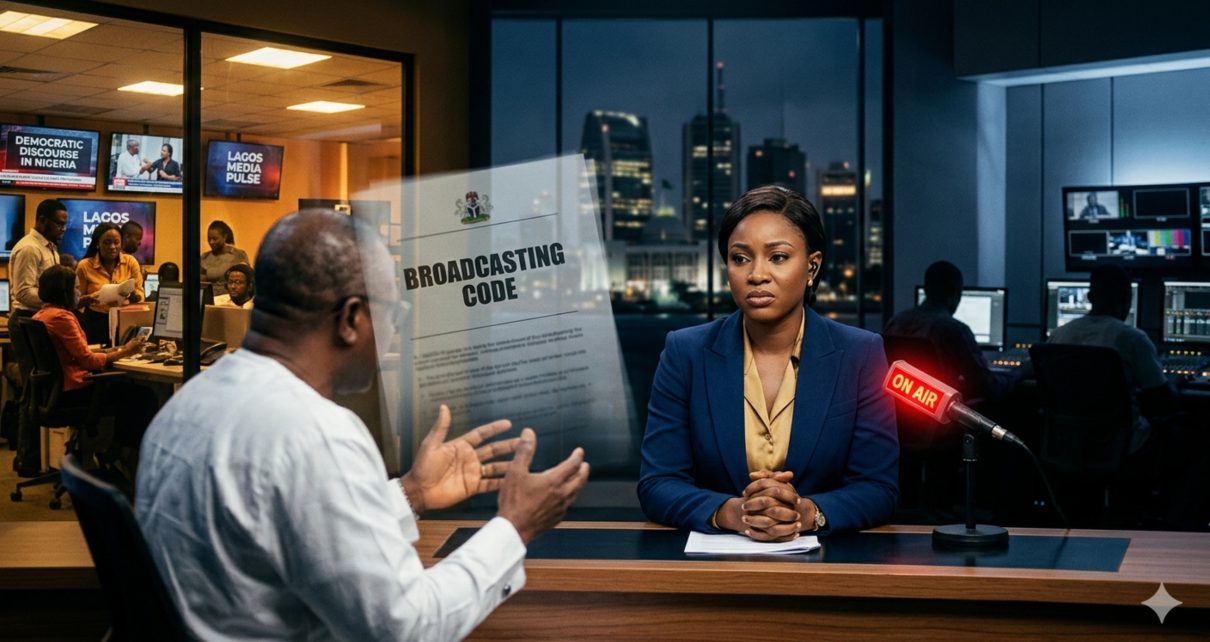
Nigeria’s media landscape is bracing for turbulence as the 2027 general elections loom just a year away. On April 17, 2026, the National Broadcasting Commission (NBC) issued a stern “formal notice” to broadcast stations nationwide, warning against presenters expressing “personal opinions” or engaging in “intimidating” behavior toward guests. This directive, rooted in the 6th Edition of the Nigeria Broadcasting Code, has ignited fierce debate, with critics decrying it as a veiled attempt to muzzle independent journalism ahead of a high-stakes poll.
The timing could not be more pointed. With inflation hovering at 28.9% in Q1 2026 (per National Bureau of Statistics data), Lagosians grapple with soaring food prices, housing crises, and erratic power supply—issues dominating public discourse. Yet, as broadcasters reel from the notice, the question arises: Is this regulatory nudge toward “professionalism” or a calculated clampdown on critical voices? For Lagos Metropolitan, a digital-first outlet serving the state’s 20 million-plus residents, the stakes are personal. Our mission—to deliver unvarnished analysis of politics, economy, and urban life—now faces indirect threats from this broadcast-focused edict.
Initial reactions were swift. The Nigerian Union of Journalists (NUJ) labelled it “an assault on press freedom,” while the Guild of Editors called for its immediate withdrawal. Stations like Channels TV and Arise News, frequent NBC targets, have already adjusted programming, opting for safer, script-bound formats. This isn’t mere housekeeping; it’s a signal that the space for live debate, a cornerstone of Nigerian democracy since the Fourth Republic, is contracting.
The Directive Dissected
At its core, the NBC notice invokes Section 1.10.3 of the Broadcasting Code, which mandates “accuracy, balance, and professionalism” in presentations. Presenters, it states, must not “express personal opinions” or “intimidate” guests, with sanctions ranging from fines to license suspensions. NBC Director-General Charles Ebikelaare justified this as curbing “unprofessional conduct,” pointing to recent broadcasts where hosts allegedly “dominated” discussions on economic policy.
But peel back the layers, and the directive reveals broader ambitions. It builds on a pattern: In 2025 alone, NBC fined stations over ₦500 million for “hate speech” and “unbalanced” election coverage. This latest move expands scrutiny to “intimidation,” a subjective term ripe for abuse. For instance, a host challenging a government official on subsidy removal fallout could be tagged as aggressive, even if backed by data from the Central Bank of Nigeria.
Legally, NBC draws authority from the National Broadcasting Commission Act of 1992, which empowers it to regulate airwaves for “national interest.” Yet, this clashes with the digital era’s realities. Lagos, with its 70% internet penetration (NCC 2026 stats), increasingly consumes news via podcasts and streams—formats the directive indirectly polices through self-censorship fears. Broadcasters, fearing audits, now train staff on “neutral phrasing,” turning vibrant talk shows into tepid recaps.
The “Code” vs. The Constitution
Here lies the rub: Does the Broadcasting Code supersede constitutional guarantees? Section 39 of the 1999 Constitution (as amended) enshrines freedom of expression, stating no law shall restrict it except “in the interest of defence, public safety, public order, public morality or public health.” Critics argue NBC’s code amounts to “prior restraint”—preemptively stifling speech before it’s aired.
SERAP’s April 20 lawsuit against NBC underscores this. In a petition to the Attorney-General, SERAP contends the directive violates Supreme Court rulings like Attorney-General of the Federation v. The Guardian Newspapers (1999), which struck down similar gag orders. Amnesty International echoed this, calling it “a draconian tool to silence dissent,” especially amid probes into 2023 election irregularities.
For digital media, the tension sharpens. While NBC lacks direct jurisdiction over online platforms, its code influences the Nigeria Press Council and emerging Digital Broadcasting Guidelines. Imagine a Lagos podcaster analysing Tinubu’s Lagos governance legacy—once fair game, now risking platform de-monetisation if echoed on airwaves. This blurring blurs professionalism with propaganda, eroding the press’s watchdog role.
Critics’ Pushback and Stakeholder Voices
The backlash has been thunderous. SERAP’s suit demands suspension, arguing it “chills” investigative journalism. Amnesty’s Osai Ojigho warned of “pre-election authoritarianism,” citing Nigeria’s 132th ranking on the 2025 World Press Freedom Index.
Broadcasters are divided. Wale Adenuga of Premier Radio decried the “vague language,” fearing it punishes tough questioning. Conversely, some state-owned outlets welcomed it, claiming it curbs “sensationalism.” The Nigerian Broadcasting Association plans a July summit, but whispers of government influence persist.
Politicians weighed in too. House Minority Leader Kingsley Chinda (PDP) linked it to executive overreach, while APC’s Julius Ihonvbere defended NBC’s mandate. In Lagos, Governor Sanwo-Olu’s media team stayed mum, amid local probes into traffic enforcement funding.
Implications for Lagos Digital Media
Lagos, Africa’s fourth-largest metropolis, thrives on unfiltered discourse—think Oshodi market debates or Lekki toll gate protests. The directive’s “chilling effect” hits hardest here: Traditional radio reaches 60% of low-income households (ITC 2026 survey), their muzzling funnels truth-seeking to apps like ours.
Enter the regulatory paradox. While NBC tightens grips, the House debates Cybercrime Act amendments to shield journalists from “frivolous” arrests—progress stalled by executive veto threats. This legislative-executive rift signals chaos: Cybercrime prosecutions spiked 40% in 2025, targeting online critics.
Pre-2027, sensitivities peak. Cost-of-living riots in Ikorodu last month drew NBC warnings; expect more as APC primaries heat up. Digital outlets like Lagos Metropolitan must fill the void, but at what cost? Ad revenue from wary sponsors dips, and shadow-banning looms via proposed social media rules.
Historical Context and Broader Trends
This isn’t new. NBC’s 2003 fines during Obasanjo’s tenure, or 2015’s anti-Buhari “hate speech” crackdowns, set precedents. Globally, it mirrors Turkey’s post-2016 media purges or India’s IT Rules 2021, where “balance” mandates favour incumbents.
In Nigeria, post-2023 election distrust lingers—INEC’s glitches fueled calls for reform. NBC’s move risks amplifying this, portraying critique as bias.
Lagos Metropolitan’s Editorial Stance and Path Forward
We stand firm: Journalistic analysis isn’t “opinion masquerading as fact”—it’s data-driven interpretation essential for accountability. Lagos’s diversity—from Yoruba traders to Igbo entrepreneurs—demands robust debate, not sanitised feeds. Diversity fuels innovation; stifled media breeds policy failures, like unchecked naira devaluation.
We’ll track this: Monitor fines, lawsuits, and amendments. True cohesion comes from quality conversation, not silenced mics. Policymakers, engage—don’t evade.
Conclusion
As 2027 nears, NBC’s directive tests Nigeria’s democratic resilience. Lagosians, demand better: Support independent media, amplify facts. The airwaves may quiet, but our digital roar endures.


