By Joy Essien
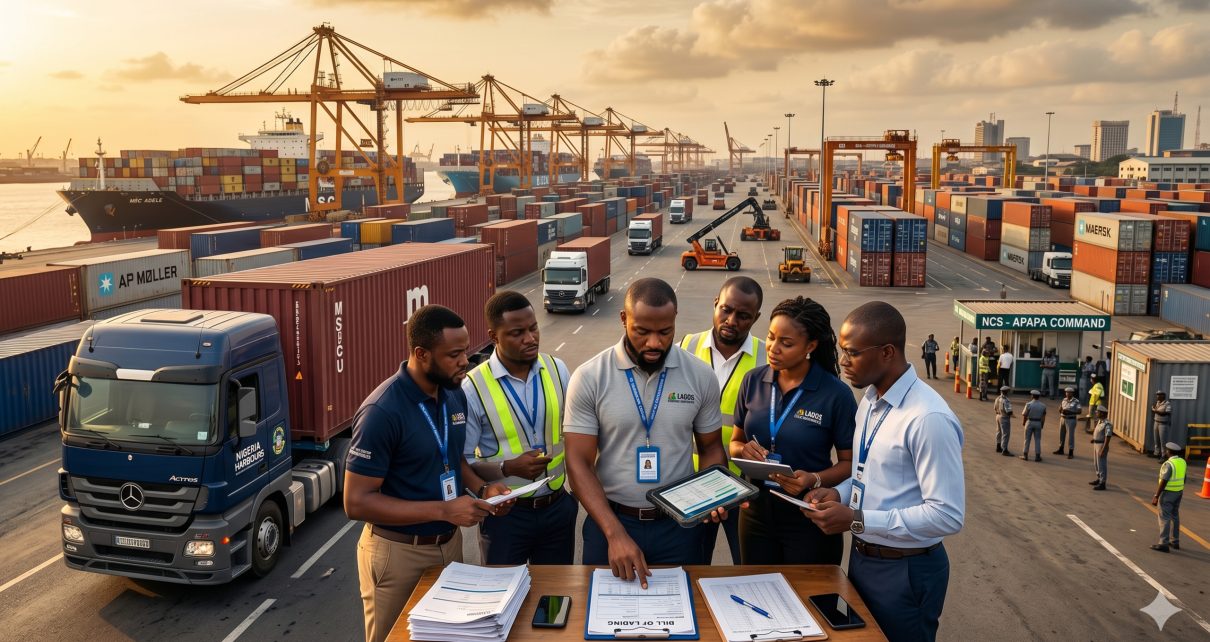
Apapa is the beating heart of Nigeria’s maritime economy—a place where containers move like clockwork and timing is everything. But behind every successful shipment is not just a vessel or a port, but a carefully orchestrated chain of decisions, relationships, and expertise. This is where freight forwarders come in.
In a city where delays can cost millions and a single documentation error can stall an entire consignment, the right logistics partner is not a luxury—it is a strategic asset. Whether you are an importer, exporter, or supply chain operator, choosing the right freight forwarding and clearing agent can determine whether your goods arrive seamlessly or get trapped in the complexities of port operations.
This guide explores some of the most reliable freight forwarding and clearing agents operating in Apapa—firms that understand not just the movement of cargo, but the mechanics of trade itself.
What Freight Forwarding Really Means
At its core, freight forwarding is the strategic planning and coordination of moving goods across international or domestic borders on behalf of shippers.
Think of a freight forwarder as a travel agent for cargo. They do not usually move the goods themselves; instead, they act as the middleman between the business shipping the products and various transportation services—such as shipping lines, air cargo carriers, and trucking companies.
How It Works
A freight forwarder handles the “heavy lifting” of logistics, which typically includes:
Negotiating Prices: They use their relationships with carriers to secure the best rates for cargo space.
Documentation: Managing the extensive paperwork required for international trade, such as Bills of Lading, commercial invoices, and export declarations.
Customs Clearance: Ensuring goods comply with legal requirements so they do not get held at the border.
Insurance & Tracking: Providing peace of mind by managing cargo insurance and offering real-time tracking updates.
Why Businesses Use Them
International shipping is highly complex. A single shipment may involve a truck to the port, crane handling onto a vessel, customs officials in multiple jurisdictions, and final-mile delivery at the destination. A freight forwarder manages all these handoffs, allowing the business owner to deal with a single, accountable point of contact.
How We Arrived At The Results
Rating a freight forwarding company goes beyond confirming delivery; it is about the efficiency, safety, and transparency of the entire journey. For a strategic business evaluation, we applied a Logistics Scorecard built on five key metrics:
1. The Reliability Index (The “On-Time” Rate)
In logistics, time is money. A top-tier forwarder should meet its Estimated Time of Arrival (ETA) at least 90–95% of the time, barring major global disruptions.
Rating Factor: Do they notify you proactively about delays, or only after a missed delivery?
2. Documentation Accuracy (The “Paperwork” Audit)
Errors in documentation are a leading cause of port delays and fines, especially with Nigerian Customs.
Standard: Near-zero error rate on critical documents such as Bills of Lading, Form M, and PAAR.
Rating Factor: Do they identify and correct your errors before submission?
3. Pricing Transparency & “Landed Cost”
A good company helps you calculate total landed cost—not just shipping rates.
Standard: Final invoice should align with the initial quote within a 5% margin (excluding variable tariffs or fuel surcharges).
Rating Factor: Are all fees clearly explained upfront?
4. Communication & Tech Integration
You should not have to chase your cargo.
Standard: Proactive updates at key milestones (e.g., dispatch, port arrival, customs clearance).
Rating Factor: Do they offer digital tracking or rely on manual communication?
5. Problem Resolution (The “Crisis” Test)
The real test is how they respond when things go wrong.
Standard: Alternative solutions provided within 24–48 hours of disruption.
Rating Factor: Do they take ownership or shift blame?
Pro Tip: For deeper analysis, review their Cargo Claims Ratio. High-quality operators maintain very low rates of lost or damaged goods.
The Listings
1. Calix Logistics
Calix Logistics (formerly Calix Logistics and Services Ltd) is a Nigerian-based firm positioned as an all-encompassing logistics provider, with a focus on precision, professionalism, and global connectivity.
Core Services:
Logistics and haulage across Nigeria; clearing and forwarding for imports and exports; agribusiness integration; and international auto sales through dealership platforms such as Copart, IAA, and Manheim.
Key Details:
Maintains a presence in Nigeria and the United Kingdom, with a strong emphasis on deadlines, GPS tracking, and data-driven logistics.
2. Prime Next Logistics
Prime Next Logistics Ltd (PNL) is a third-party (3PL) and fourth-party (4PL) logistics provider headquartered in Lagos, specialising in integrated supply chain solutions across major global routes.
Core Services:
Freight forwarding (sea and air), customs brokerage, warehousing, distribution, project logistics, and trade consulting.
3. SIFAX Group
SIFAX Group is one of Africa’s largest indigenous conglomerates, founded in 1988 by Dr Taiwo Afolabi. It has evolved into a multinational entity spanning maritime, aviation, logistics, and beyond.
Core Subsidiaries & Services:
Ports and cargo handling, bonded terminals, aviation ground handling (SAHCO PLC), haulage and shipping, as well as interests in hospitality, finance, and oil and gas logistics.
4. The Clearing Agent Ltd
The Clearing Agent Solutions Limited is a specialised customs brokerage and freight forwarding firm focused on documentation and port logistics.
Core Services:
End-to-end customs clearance, cargo handling, procurement (shop-to-door services), and documentation support including Form M, NEPC, NXP, and SON certifications.
Operational Highlights:
Electronic clearance through multiple licensed agencies and global hub services for cargo consolidation.
5. AMG Logistics
AMG Logistics (Nig) Ltd is a TRACE-certified provider established in 2014, known for compliance, transparency, and customer-centric solutions.
Core Services:
Freight forwarding, customs clearance, oil and gas logistics, project cargo management, warehousing, and relocation services.
Compliance Note:
TRACE certification reflects adherence to strict anti-bribery and due diligence standards.
6. Zenith Carex
Zenith Carex International Limited is a veteran logistics and courier firm with a strong operational base in Abuja and nationwide reach.
Core Services:
Express courier, freight forwarding, customs clearance, cold-chain logistics, and bonded terminal operations.
Why They Stand Out:
Widely trusted by NGOs and international organisations due to high compliance standards and strong last-mile delivery capabilities.
7. Cargoburg Logistics Ltd
Cargoburg Logistics Limited specialises in multi-modal transportation and door-to-door logistics services.
Core Services:
Freight forwarding, customs brokerage, cargo handling, warehousing, and distribution.
Industry Profile:
Particularly suited to SMEs requiring a single point of contact for end-to-end logistics.
8. Tetra Maritime Ltd
Tetra Maritime Ltd is a ship owner and operator focused on marine logistics for the oil and gas sector.
Core Operations:
Marine transportation, ship management, offshore logistics, and strategic partnerships with global operators.
Key Initiatives:
Crew development through Goodwork Marine Services and technical training via SeaLearn.
9. Supermaritime Nigeria Ltd
Supermaritime Nigeria Ltd is part of a global logistics network headquartered in Rotterdam, offering integrated maritime and logistics services.
Core Services:
Vessel agency, freight forwarding, customs clearance, offshore logistics, and project cargo handling.
Why They Stand Out:
Strong international footprint with operations across multiple continents, making them ideal for multinational logistics coordination.
10. Optidar Nigeria Ltd
Optidar Nigeria Limited is a diversified logistics company established in 2005, offering integrated supply chain and commodity trading solutions.
Core Services:
Sea and air freight, customs clearance, LCL consolidation, warehousing, trucking, and export commodity trading.
Operational Focus:
Strong emphasis on relationship-driven logistics and global freight network integration.
How To Choose The Right Service
Choosing the right freight forwarder is about alignment—not size.
1. Verify Their Regulatory Credentials
Ensure registration with CRFFN, valid customs licensing, and membership in recognised industry bodies such as ANLCA or NAGAFF.
2. Industry And Route Specialisation
Assess their experience with your trade lane and cargo type. Expertise in your specific route or commodity is critical.
3. Conduct A Hidden Cost Audit
Request a full breakdown covering terminal charges, demurrage, and documentation fees.
4. Evaluate Communication And Visibility
Look for digital tracking systems and dedicated account managers for seamless coordination.
Key Questions To Ask:
- What processes are handled in-house versus outsourced?
- What is your protocol for customs issues?
- Can you provide relevant client references?
- Do you offer full cargo insurance?
Final Thoughts
Freight forwarding is not just about moving goods—it is about managing complexity.
The Middleman Is The Architect
A forwarder designs the journey, navigating geography, regulation, and documentation.
Efficiency Is Digital
Real-time tracking and data-driven decision-making now define industry leaders.
Think In Landed Cost, Not Freight Cost
The cheapest quote can become the most expensive mistake.
Local Expertise Matters
In markets like Lagos, on-the-ground knowledge is often more valuable than global scale.
The Golden Rule:
Choose transparency over price. A forwarder who shows you exactly where your goods are—and where your money is going—is a partner. One who does not is a liability.


