By Joy Essien
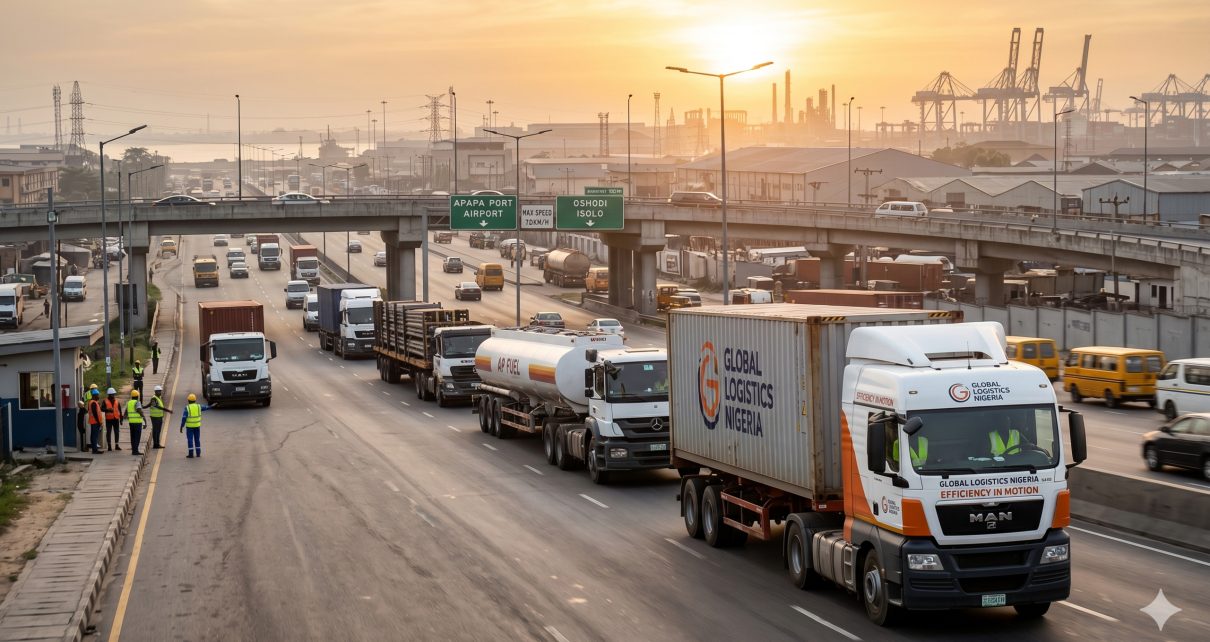
Lagos does not sleep—and neither do the trucks that keep it alive. From the ports to the factories, from warehouses to retail shelves, the city runs on a constant movement of goods that is as complex as it is essential. But in 2026, that movement is being redefined.
What was once a chaotic, Apapa-bound ecosystem is evolving into a smarter, multi-hub network powered by technology, new infrastructure, and shifting economic forces. Today’s haulage landscape is no longer just about horsepower; it is about data, coordination, and adaptability.
For businesses navigating this terrain, the choice of a trucking and haulage partner is critical. The right operator does more than move cargo—they protect timelines, reduce costs, and provide visibility in an otherwise unpredictable environment.
Here is a closer look at the forces shaping Lagos haulage—and the companies helping businesses move with confidence.
The Four Structural Shifts Reshaping Lagos Haulage
1. The Rise Of The New Hubs (Lekki & Epe)
While Apapa was historically the centre of Lagos haulage, the focus has shifted significantly toward the Lekki–Epe corridor.
Lekki Deep Sea Port: By early 2026, it has become Nigeria’s leading port, handling over 40% of the nation’s cargo. This has redirected thousands of trucks away from the traditional Apapa and Tin Can Island bottlenecks.
The Dangote Factor: With the Dangote Refinery and petrochemical plants scaling up, the corridor now sees between 360 and 400 trucks daily, with projections rising to 3,000–4,000 as downstream operations reach full capacity.
2. The Digitalisation Of The Call-Up System
Manual queuing is gradually being replaced by electronic gatekeeping.
ETO System Review: The Electronic Truck Call-Up System (ETO), which transformed Apapa traffic, is under review by the Nigerian Ports Authority as of March 2026 to ensure continuity after changes in management.
Lekki E-Call Up: To avoid replicating Apapa’s gridlock, the Lagos State Government has introduced a similar system for the Lekki–Epe axis. Trucks must now be validated at designated parks before being electronically called to loading points.
3. Structural And Economic Realities
Despite progress, the terrain remains challenging—especially for smaller operators.
Asset Inflation: The cost of acquiring a new truck has risen to between ₦30 million and ₦40 million, limiting entry for smaller firms.
Road Dominance: Nearly 90% of logistics in Nigeria still relies on road transport, accelerating road wear and increasing maintenance costs.
Fuel And Cost Pressures: Rising operational costs are driving interest in AI-based routing and load pooling to reduce empty return trips.
4. Intermodal Ambition
Lagos is gradually shifting towards a more balanced transport system.
Barge Operations: Approximately 10% of cargo from Lekki Port is now moved via barges to bypass road congestion.
Rail Integration: There is renewed focus on linking ports to the national rail network, allowing trucks to focus on last-mile delivery.
How We Arrive At The Results
As is standard practice at Lagos Metropolitan, the presence of a website, active Instagram handle, Google ratings and reviews, a physical address, and contact numbers are non-negotiable.
When selecting a trucking or haulage partner, the goal is to balance technical capacity with operational reliability. In a market like Nigeria, stability and transparency are paramount.
Here are the key evaluation criteria:
1. Fleet Quality & Maintenance
Asset Ownership: Does the company own its trucks (like TSL or MPZ), or operate as a marketplace (like Kobo360)? Ownership often ensures stricter maintenance control, while marketplaces offer scalability.
Maintenance Logs: A documented inspection schedule reduces breakdown risks and costly delays.
2. Insurance & Risk Management
Goods In Transit (GIT) Insurance: Essential protection against loss, theft, or damage.
Security Protocols: Look for GPS tracking, escort services (if needed), and proper driver vetting.
3. Pricing Transparency
All-Inclusive Quotes: Prefer door-to-door pricing that includes tolls, clearing, and handling fees.
Hidden Fees: Be cautious of low initial quotes that later include demurrage or port charges.
4. Technical & Regulatory Compliance
Certifications: ISO standards (9001, 39001) and affiliations with bodies like CILT indicate professionalism.
Documentation: Ensure CAC registration and valid haulage permits.
5. Communication & Technology
Real-Time Tracking: Visibility via apps or portals is now essential.
Single Point Of Contact: A dedicated account manager ensures coordination.
6. Specialisation (The “Right Tool” Rule)
Cold Chain: Required for perishables and pharmaceuticals.
Oversized Loads: Requires low-bed trailers and OOG expertise.
Red Flags To Watch Out For
- Vague delivery timelines
- Unbranded or poorly maintained trucks
- Lack of a physical office or logistics hub
The Listings
1. Axopolitan Moving
Axopolitan Moving is a Lagos-based relocation and storage company known for its professional packing and customer-focused service.
Core Services: Residential moving, commercial relocation, storage solutions, and specialised packing for fragile items.
Key Features: Virtual surveys, advance box delivery, and flexible scheduling options.
2. Bowagate Global Ltd
Bowagate Global Ltd is a seasoned logistics provider with over 30 years of experience, specialising in international freight and trade logistics.
Core Services: Air and sea freight, customs brokerage, import/export logistics, and door-to-door delivery.
3. TSL Transport Services Ltd
Transport Services Limited (TSL) is one of Nigeria’s largest logistics conglomerates, operating at an industrial scale.
Scale: Fleet of over 800 trucks.
Specialisation: FMCG distribution, construction materials, and petroleum logistics.
Infrastructure: Includes a vehicle assembly plant and advanced driver training facilities.
4. MDS Logistics
MDS Logistics is a pioneer in Nigeria’s third-party logistics (3PL) sector and a leader in warehousing and distribution.
Core Strengths: Nationwide warehousing network, pharmaceutical logistics, telecom supply chain support, and FMCG distribution.
Key Services: Lead logistics provider (LLP), project logistics, and value-added warehousing services.
5. SIFAX Group
SIFAX Group is a major multinational conglomerate with extensive operations across maritime, aviation, and logistics sectors.
Core Services: Port operations, aviation handling, haulage, financial services, and real estate.
6. D2D Cargo
D2D Cargo is a fast-growing logistics company focused on enabling SMEs to access global trade.
Core Services: Groupage shipping, air consolidation, procurement services, customs clearance, and nationwide delivery.
7. VDS Global Logistics Ltd
VDS Global Logistics is a flexible, service-driven logistics provider with a strong export focus.
Core Services: Air freight, door-to-door delivery, export logistics, warehousing, and distribution.
8. Kobo360
Kobo360 is a technology-driven logistics marketplace connecting shippers with truck operators.
Core Features: AI-powered matching, real-time tracking, driver financing (KoboPay), and integrated insurance (KoboSafe).
9. Conote Services Ltd
Conote Services Limited is a premium logistics and relocation company known for performance in complex environments.
Core Services: Corporate relocation, international moving, multimodal freight, and specialised cargo handling.
10. MPZ Trucking Company
MPZ Trucking Company Limited is a long-standing haulage firm specialising in container transport.
Core Services: Container haulage, freight services, warehousing, and interstate delivery.
How To Choose The Service
Top trucking and haulage providers in Lagos are defined by reliability, fleet strength, and adaptability.
Quick Tips:
- Confirm Goods In Transit (GIT) insurance
- Ensure access to port call-up systems (e.g., ETO)
- Prioritise real-time GPS tracking
Final Thoughts
Nigeria’s logistics sector is moving from fragmentation to structure.
Whether through infrastructure investment, technological platforms, or professional standards, the industry is becoming more predictable, more transparent, and more efficient.
For the modern Lagos trucker, the job is no longer just about driving. It is about navigating digital systems, managing logistics data, and operating within a rapidly evolving urban ecosystem.
In this new era, the best haulage partner is not just one that moves goods—but one that understands the system.


