

1 Peter 1:17–21
Every generation faces pressure.
Some pressures come openly. Others arrive quietly, disguised as common sense, modern wisdom, or social expectation. But pressure has one objective: to make people conform.
In a city like Lagos, conformity can happen almost without notice. The culture around us constantly tells us what success should look like, what happiness should look like, and even what morality should look like. Slowly, people begin to adjust themselves to fit the expectations of the environment around them.
The challenge is not new.
The believers to whom Peter wrote lived in a world that often stood in opposition to their faith. They were surrounded by values that did not honour God. They faced pressures to blend in, to compromise, and to lower the standards by which they lived.
Yet Peter’s message was remarkably clear: “Be holy in all your conduct.”
That instruction sounds simple until we consider what it actually means.
Holiness is often misunderstood. Some imagine it means withdrawing from society. Others think it refers only to outward behaviour. But biblical holiness goes much deeper.
Holiness begins with belonging.
Before Peter tells believers how to live, he reminds them who they are.
They have been redeemed.
They have been purchased—not with silver or gold, but with the precious blood of Christ.
And that changes everything.
You see, behaviour flows from identity. The way we live is shaped by what we believe about ourselves.
When people forget who they are, they begin to imitate whatever surrounds them. But when believers understand that they belong to Christ, their choices begin to reflect that reality.
This is why Peter does not appeal primarily to fear. He appeals to gratitude.
The Christian life is not an attempt to earn God’s favour. It is a response to God’s grace.
The believer does not pursue holiness in order to be loved. The believer pursues holiness because he has already been loved.
Now, this distinction matters greatly.
Because rules alone rarely transform people.
External pressure can modify behaviour for a time, but lasting change happens when the heart is captured by something greater.
That is exactly what happens when we understand the cost of our redemption.
Peter reminds his readers that Christ gave Himself for them. The cross was not an accident. It was not an afterthought. It was God’s deliberate act of love to rescue humanity from sin and restore us to Himself.
Be assured of this: when you begin to understand the value God places on your life, you also begin to understand why He calls you to live differently.
The call to holiness is not a restriction.
It is a restoration.
God is not trying to take away joy. He is restoring people to the life He originally intended.
That perspective becomes increasingly important in a culture that often celebrates whatever feels good in the moment.
Many of the choices that promise freedom eventually create bondage.
Many of the paths that appear attractive eventually produce emptiness.
Many of the values that receive public applause ultimately fail to satisfy the human heart.
This is why holiness remains relevant.
It protects.
It preserves.
It points us toward what is truly life-giving.
Now, this does not mean the journey is easy.
There will always be moments when compromise appears more convenient than conviction.
There will be situations where doing the right thing seems costly.
There will be occasions when standing apart feels uncomfortable.
That is part of the challenge of living faithfully in a fallen world.
But Peter reminds believers that they are pilgrims. They are travellers. Their values are not ultimately determined by the culture around them, but by the God who has called them.
That perspective changes how we respond to pressure.
Instead of asking, “What is everyone else doing?” we begin to ask, “What honours God?”
Instead of pursuing acceptance at any cost, we pursue faithfulness.
Instead of living merely for the present moment, we live with eternity in view.
And this is where holiness becomes deeply practical.
It shapes how we work.
It influences how we speak.
It affects how we handle money.
It determines how we treat people.
It guides the decisions we make when nobody else is watching.
The reality is that every day presents opportunities either to conform or to remain faithful.
Most of those opportunities are not dramatic.
They appear in ordinary conversations.
They arise in routine decisions.
They surface in quiet moments when character is tested.
And over time, those choices shape the kind of people we become.
The world may never applaud holiness. In fact, it may often misunderstand it.
But God’s call remains unchanged.
Not because He wants His people to be different for the sake of being different, but because He wants them to reflect His character in a world that desperately needs light.
The thing is this: the strongest witness is often not a loud declaration, but a consistent life.
A life that remains faithful.
A life that remains clean.
A life that remembers who it belongs to.
And in a world constantly inviting us to conform, that kind of life speaks powerfully.
Prayer
Lord, help me to remember who I am in Christ. Give me the courage to live faithfully in a world that constantly pressures me to conform. Let my life reflect Your holiness, Your grace, and Your truth. Amen.
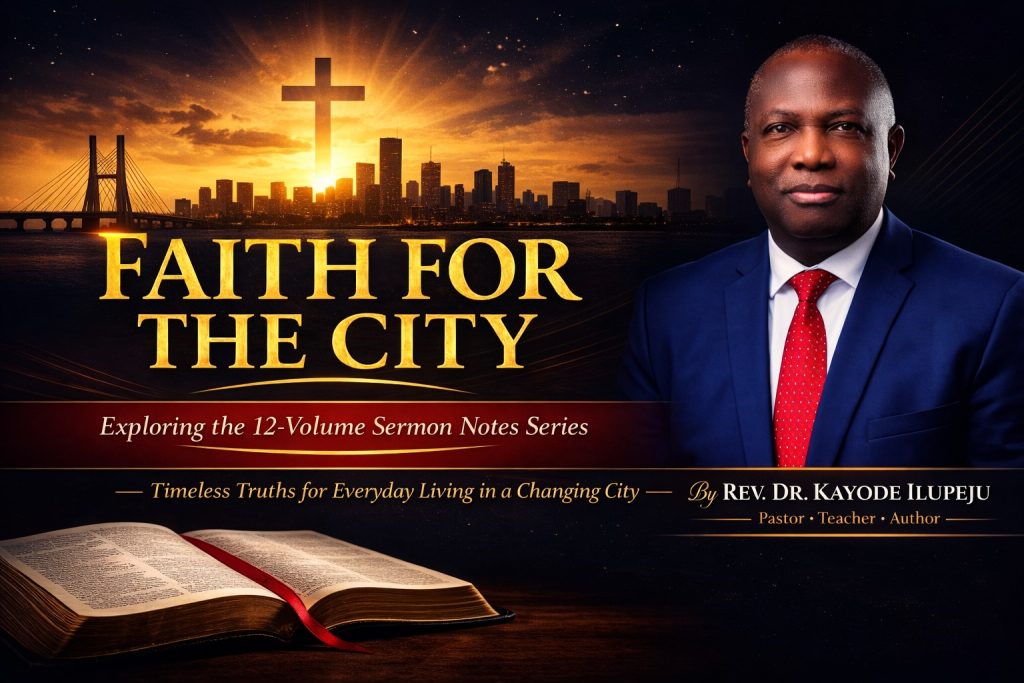
- Adapted from Foundations of the Christian Life (Volume 1), part of the 12-volume Sermon Notes Series by Rev. Dr. Kayode Ilupeju.


