
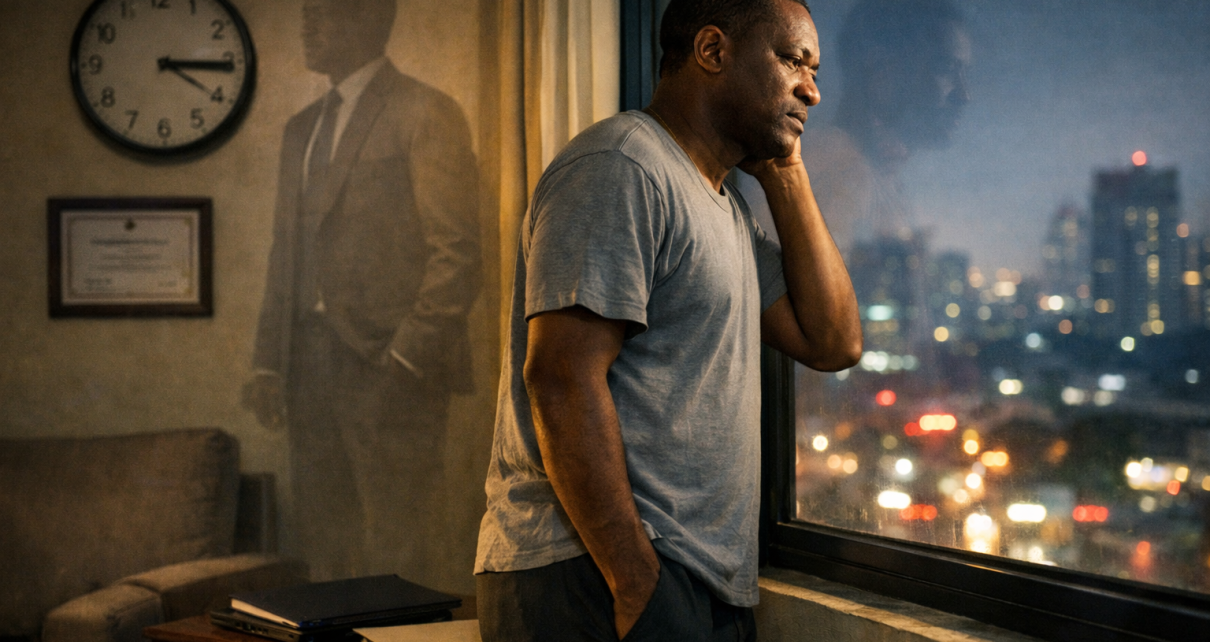

Dennis was once the dependable one in his family. In his mid-forties, trained as an engineer, previously employed, socially engaged, and independent, he carried himself with quiet confidence. He had plans. He had structure. He knew who he was.
Then he was involved in a serious road accident.
He survived. His physical injuries were treated. There were hospital visits, follow-ups, and the visible work of recovery. From the outside, it appeared that life should gradually return to normal.
But it did not.
Dennis never quite resumed his former rhythm. He did not return to work. He began withdrawing from friends and relatives. His sleep grew irregular, then severely disrupted. Nights became long stretches of wakefulness filled with restless thoughts. During the day, he appeared distant and preoccupied, sometimes suspicious that former colleagues had plotted against him. More recently, he reported hearing voices and, at times, struggled to express himself clearly.
To a family watching this unfold, it can feel confusing and frightening. The man they knew seems to be fading. Questions arise. Is this stubbornness? Is it spiritual? Is it stress? Why can he not simply “move on”?
Trauma Beyond the Body
As a Developmental Psychologist and Family Therapist, I often explain that trauma does not affect only the body. It can alter a person’s sense of safety, identity, and connection to reality. When someone experiences a life-threatening event, the nervous system shifts into survival mode. Even after physical wounds heal, the internal alarm system may remain activated.
Sleep disturbance is often one of the earliest signs. When the brain perceives danger, it struggles to power down. Persistent insomnia then affects concentration, emotional regulation, and perception. Thoughts can become repetitive and rigid. If isolation follows, there are fewer external checks to balance distorted interpretations. Over time, especially without sustained therapeutic support, trauma can deepen into more severe psychological symptoms.
The Hidden Escalation
In Lagos and similar urban environments, the pace of life leaves little room for emotional processing. There is pressure to remain strong, particularly for men. Vulnerability is often equated with weakness. Families may focus on practical support—accommodation, medical bills, daily logistics—while overlooking the need for psychological care. Yet trauma is not resolved by willpower.
Dennis’s story also reminds us that no traumatic event exists in isolation. Earlier emotional experiences shape how a person responds to later crises. If someone has previously endured unresolved heartbreak, chronic stress, or unexpressed disappointment, a major accident can reopen those emotional wounds.
Developmentally, our coping patterns are built over time. When stress exceeds those coping resources, the system begins to strain.
Suspiciousness, social withdrawal, excessive rumination, and disorganised speech are not character flaws. They are signs that the mind is struggling to integrate overwhelming experiences. Hearing voices or losing clarity of thought can be deeply distressing, but such symptoms rarely emerge without context. They often follow prolonged untreated trauma combined with sleep deprivation and isolation.
What Families Should Look For
For families navigating similar situations, early recognition is critical. Persistent insomnia, noticeable personality changes, growing mistrust, and withdrawal should not be dismissed as attitude problems. These are signals that professional assessment is needed.
Reducing shame is equally important. Conversations should move away from blame and toward understanding. Instead of asking, “Why is he behaving this way?” it may be more helpful to ask, “What might he be carrying internally?”
Practical steps can support recovery. Encouraging consistent sleep routines, limiting late-night phone use, creating structured daily activities, and maintaining gentle social contact can help stabilise the nervous system. However, when symptoms escalate to hallucinations or severe functional decline, specialised psychiatric and psychological care becomes essential. Medication may help manage acute symptoms, while psychotherapy addresses the underlying trauma and helps rebuild identity.
Healing Is Integration, Not Erasure
Healing after trauma is rarely about returning to the exact person one was before. It is about integrating what happened and reconstructing a stable sense of self. That process requires patience, professional support, and a family environment that replaces judgement with compassion.
Dennis’s story is not rare. In a city where accidents, stress, and sudden disruptions are part of everyday life, many individuals silently struggle with the psychological aftermath of trauma.
Perhaps the deeper question for families is this: when someone begins to change in ways we do not understand, are we prepared to see not just the behaviour, but the wound beneath it?
- Itunuoluwa Onifade is a developmental psychologist and a family life therapist.


