
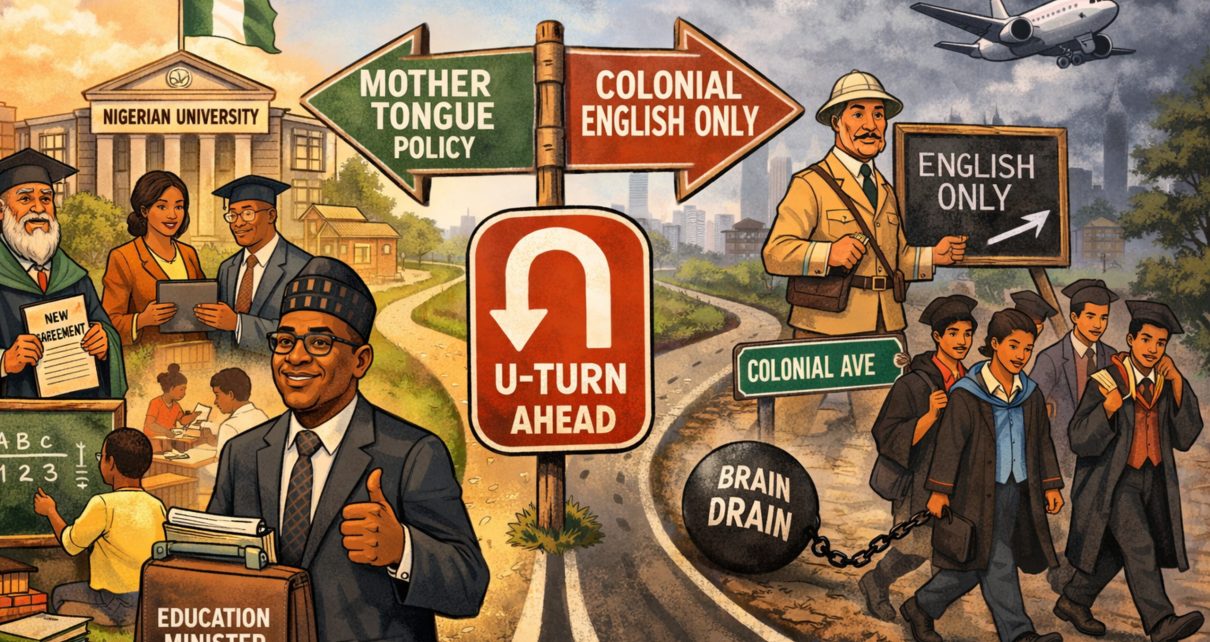

Congratulations to the Academic Staff Union of Universities, all members of Nigerian academia, and the Nigerian government for finally renegotiating the conditions of service of academic staff in Nigerian universities after many years of failed government implementation of the original 2009 agreement. Maybe we can now begin to experience a return to normalcy in universities and an improvement in the quality of graduates produced.
Effective January 1, 2026, the remuneration of all academic staff in federal universities will go up by 40 per cent. Core academic activities such as research, journal publications, conference participation, internet access, learned society membership, and book procurement are now to be incentivised under the category of tools allowance.
Increases
Nine earned academic allowances are restructured to promote transparency and fairness by tying payments strictly to duties performed. Thus, postgraduate supervision, fieldwork, clinical responsibilities, examination duties and leadership roles within the university system are now specifically recognised and rewarded while a new Professorial Cadre Allowance for senior academics has now been newly introduced. This provision entitles full-time professors to a N1.74m allowance annually, while readers will earn N840,000 per annum.
It is envisaged that the new measures will boost productivity and curb brain drain. Education Minister Tunji Alausa believes that the agreement goes beyond a formal document and represents a “renewed trust, restored confidence, and a decisive turning point in the history of Nigeria’s tertiary education system.”
If that turns out to be the case, the Tinubu government would have solved a major problem that has been confronting university education for decades— that of staggered academic calendars caused by incessant strikes by undervalued, underpaid, and under-motivated academic staff whose sole trusted weapon is withdrawal of services.
It’s been a litany of woes over the years: In 1999, the academic staff went on strike for five months; in 2001, three months; in 2009, four months; in 2011, five months; about 11 months under President Jonathan; two months in Buhari’s first two years, and eight months towards the end of his tenure. Nigerian universities have regularly lost one year out of every five!
Congratulations
Under President Tinubu’s administration, the newly signed collective bargaining document will go down as a landmark achievement if faithfully implemented. The devil is in the implementation. But, as they say in my neck of the woods, whether a child would die in infancy or not, it is still customary to congratulate the parents. Kudos to Minister Alausa and his team, including the former Secretary to Government, Alhaji Yayale Ahmed (good man), who chaired the negotiating team.
While appreciating the government’s gesture, ASUU pointed out that there were still some governance issues, especially with regard to university autonomy and administration that are still ‘work in progress’. These issues should be ironed out over time in the interest of our universities. ASUU President, Prof Chris Piwuna, hoped that despite lingering doubts, “The union would not need to issue a strike threat for the full implementation of the 2025 ASUU-FGN renegotiated agreement.” Amen!
However, this is as good a time as any to re-examine another measure announced by Minister Alausa that could lead to retrogression in the Nigerian educational sector. Last November, Alausa announced a reversal of the lingua franca policy for primary education in Nigeria in favour of instruction in the English language. He directed that the language of Nigeria’s former coloniser would be the only medium of instruction in the educational system from kindergarten through primary and secondary to tertiary institutions! With due respect, there is no way Alausa can pretend to be in a position to untie the intellectual sandals of the foremost educationist, Prof Babs Fafunwa, who authored the lingua franca policy based on research.
Mother-Tongue
Fafunwa, Nigeria’s first professor of education and his team had, between 1970 and 1978, carried out a research undertaking titled “EDUCATION IN MOTHER TONGUE: THE IFE PRIMARY EDUCATION RESEARCH PROJECT, 1970-1978” in which children who were taught exclusively in Yoruba during their primary education significantly outperformed those taught in a system that switched to English early. The children taught in the local language also beat the others in the English language despite the fact that they learnt English as just another subject like arithmetic.
There were a few research efforts that predated Fafunwa’s in the use of the Yoruba language. There is evidence that Yoruba was used as a means of instruction around 1840 in a girls’ school in Sierra Leone after many years of research. Yoruba orthography has since developed to match the changing times to the extent that today, there is no concept that cannot be explained in Yoruba. None! A lot of surprise awaits any open-minded person interested in researching the massive developments in Nigerian local languages. Please read my 2023 article, “Why Can’t Science Speak ‘Vernacular’?” (https://leadership.ng/why-cant-science-speak-vernacular/)
The outcome of Fafunwa’s experiment was celebrated all over academia. UNESCO also endorsed the findings and encouraged African states to start teaching in their mother tongue. It wasn’t a difficult thing to understand. Chinese children learn in the Chinese language. English children are taught in English. Indian children are taught in Hindi. French children are taught in French. Spanish children learn in Spanish, just as Russian children are taught in Russian.
Only Africans are forced to first conquer a colonial linguistic barricade before taking the baby steps in learning. When children are forced to learn in a language they do not yet understand, they are more likely to memorise words without comprehension, leading to what the erudite professor described as “epistemological disorientation”.
Because memories are short, it is good to remind ourselves that Fafunwa, an alumnus of both Bethune-Cookman College, Florida, USA, (1948-50), and New York University, USA, (1950-55), bagged a B.Sc Magna Cum Laude in Social Science and English and M.A (Cum Laude) in Administration and Higher Education before achieving his doctorate in Education.
He was a senior lecturer and head, College of Education, University of Nigeria, Nsukka, 1961-63; professor, dean and director, Faculty and Institute of Education, University of Nigeria, Nsukka, 1964-66; professor and dean of Education, University of Ife (now Obafemi Awolowo University), lle-Ife, 1967-79; deputy vice-chancellor, OAU, lle-Ife, 1970-72; and Honourable Minister of Education (1991-93) et cetera! You can’t throw away the life’s work of such an intellectual giant in a casual manner without dire consequences to the society.
Make a U-Turn
Dr Alausa is a very brilliant nephrologist, but education is a different ballgame. He has done well with ASUU. However, his decision on lingua franca is not correct. Rather, we should be carrying out a massive standardisation of some of our major local languages and then train linguists and experts to produce systematised texts for instruction in our public schools. This about-turn to Colonial Avenue will only lead to regression.
There already exists a large body of work on the use of lingua franca for instruction in Yoruba, Hausa, Igbo and some other local languages. Perhaps the teachers’ unions, NGOs, UNESCO affiliates, parents/teachers associations, educational researchers in transliteration and other fields will help point the way to Minister Alausa. When you find out that you are headed in the wrong direction, the sensible thing to do is to make a U-turn!


