Lagos has mastered the art of distraction.
At any given moment, the city is discussing at least three unrelated things with equal passion—politics, football, and entertainment—while the real issues quietly adjust prices in the background.
This week, it was the entertainment industry’s turn.
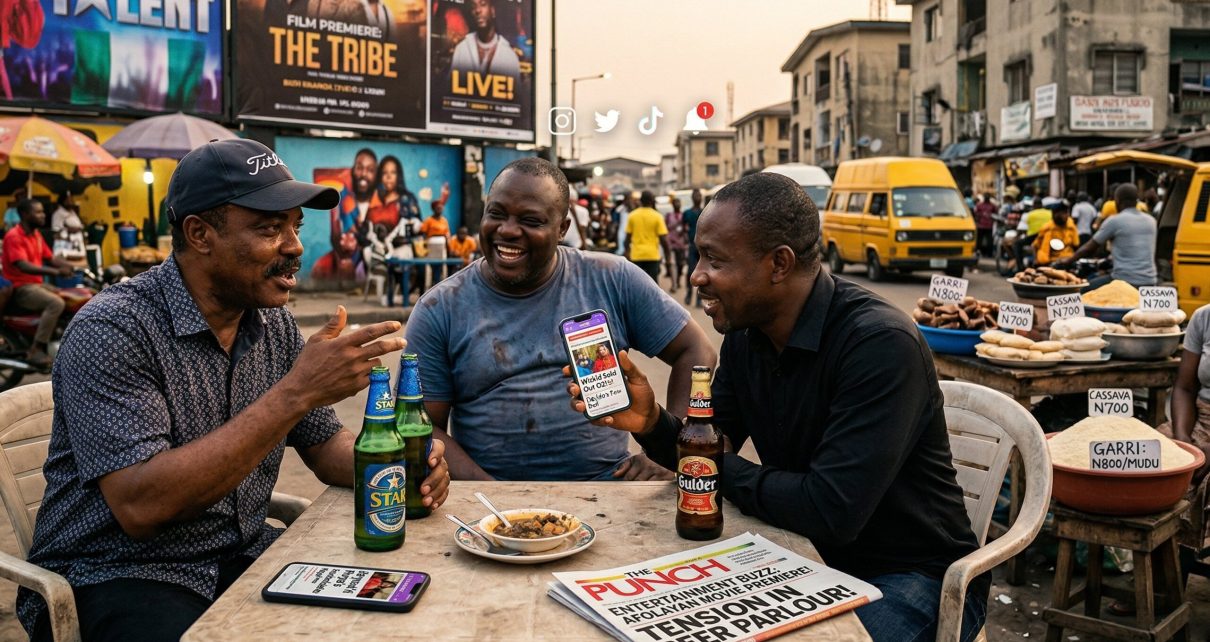
By the time the matter reached Aguda, it had already matured into full beer parlour analysis.
Chiboy arrived first, laughing before he even sat down.
“Una don see Phyna? This BBL matter don turn documentary!”
John shook his head slowly.
“Everything now na upgrade. Even body don enter software update.”
The table burst into laughter.
I adjusted my cap, preparing to offer a more measured perspective. But Lagos does not always wait for measured perspectives.
Phyna’s cosmetic surgery had dominated conversations for days—videos, recovery updates, commentary from experts who had never seen a surgical theatre.
In Lagos, everybody is a consultant.
Chiboy leaned forward.
“My own be say, if person wan do, make she do. But why we go dey follow am like election result?”
John replied instantly:
“Because Nigerians no dey mind their business. Na our national hobby.”
There is a peculiar intimacy in Nigerian public life. Personal decisions quickly become communal debates.
Yet even as the conversation flowed, another topic entered the room.
The long-standing tension between Funke Akindele and Toyin Abraham had resurfaced—this time dragging Kunle Afolayan into the mix.
John leaned back, smiling knowingly.
“Film industry no dey act film again. Dem don become the film.”
Chiboy nodded.
“Every time, somebody dey vex. Today na this one, tomorrow na that one. Netflix no even need script.”
The laughter returned.
Entertainment, in Lagos, is no longer confined to screens. It spills into real life, where rivalry, speculation, and narrative twists unfold daily.
I attempted to introduce some structure.
“Creative industries thrive on visibility,” I said. “Conflict increases attention.”
Chiboy looked at me with mild irritation.
“Syracuse, no turn beef to business model. Some people just like trouble.”
Fair enough.
Still, before the debate could settle, the third issue arrived—like all Lagos trends do—uninvited but fully prepared.
Rumours had spread that Burna Boy’s music had been banned by DJ associations.
For a brief moment, social media entered panic mode.
Then, just as quickly, the story collapsed under clarification from the DJ Association of Nigeria.
No ban. No crisis. Just another rumour that enjoyed a short but successful career.
John laughed loudly.
“So we don dey panic for nothing again?”
Chiboy raised his hands.
“Nigeria na rumour republic. Before truth wear shoe, lie don reach bus stop.”
There was nothing to add to that.
The pattern is familiar. A story emerges. It spreads rapidly. It gathers outrage. And then, quietly, it dissolves—leaving behind only fatigue and memes.
I leaned forward, attempting once again to summarise the week.
“In three days,” I said, “we have debated surgery, celebrity rivalry, and a music ban that never existed.”
John nodded.
“Full-time job.”
Chiboy added:
“And we no dey collect salary.”
The table laughed again.
But beneath the humour lay something more instructive.
The volume of conversation does not always match the weight of the issue. We invest enormous energy discussing things that do not materially affect our lives.
Meanwhile, the issues that do—quietly, consistently—continue their work.
As if on cue, a vendor passed by, calling out prices.
Garri had increased again.
The beer parlour fell silent.
John spoke first.
“Wait… how much he talk?”
Chiboy repeated it slowly, as if confirming a medical diagnosis.
“Garri don jump again.”
There are moments when reality interrupts entertainment.
No trending topic competes effectively with food prices.
I leaned back and allowed the silence to settle before delivering the final observation.
“All these conversations,” I said, “are important in their own way. Culture matters. Entertainment matters. But survival matters more.”
Chiboy nodded reluctantly.
“BBL no go reduce hunger.”
John added:
“Celebrity beef no go cook soup.”
Exactly.
In Lagos, distraction is abundant, but consequence is selective. At the end of the day, no matter what trends online, the average person returns to the same question:
Can I afford to live tomorrow?
As we stood up to leave, John gave the final, unforgettable line.
“All this gist sweet… but e no go settle garri.”
There was nothing left to argue.
Because in this city, entertainment may dominate the conversation—but the cost of living always wins the conclusion.
Na so we see am.


