
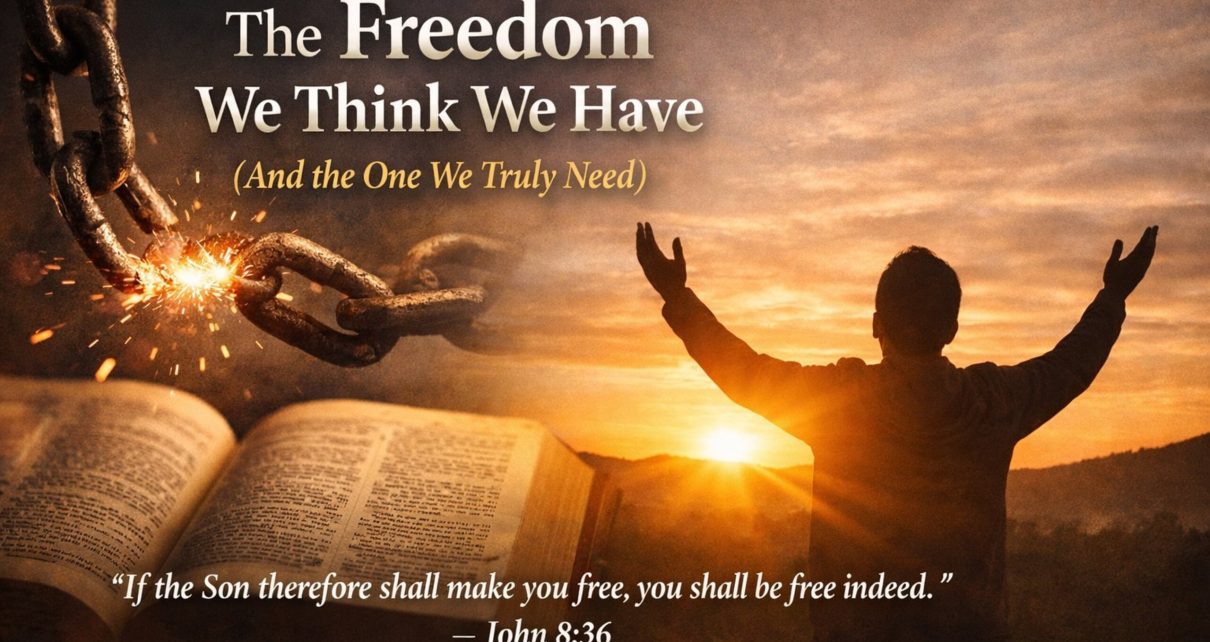
“If the Son therefore shall make you free, you shall be free indeed.” — John 8:36
Freedom is one of the strongest desires of the human heart.
We want to be free—free from control, free from oppression, free to make our own choices. Across history and even in today’s Nigeria, people celebrate when power changes hands, when bad leadership is challenged, or when systems of injustice are confronted. Freedom, in that sense, is something we instinctively understand and pursue.
But there is a deeper question we rarely ask:
Are we truly free?
The Illusion of Freedom
Many people believe they are free simply because no one is visibly controlling them. You can choose your career, express your opinions, move where you want, and live how you please. On the surface, that looks like freedom.
But Jesus introduces a more unsettling reality.
He says that anyone who commits sin is a slave to sin.
That means a person can be politically free, socially active, economically ambitious—and still be in bondage. Not to a government. Not to a system. But to something within.
Habits you cannot break.
Desires you cannot control.
Anger that erupts without warning.
Choices you regret but keep repeating.
This is a different kind of slavery—one that does not use chains, yet holds people tightly.
Three Levels of Bondage
The human struggle with freedom often exists at three levels.
1. External bondage
This is the kind we recognize easily—oppression, injustice, hardship. It is visible and often discussed.
2. Mental or religious bondage
This happens when people surrender their thinking—following ideas, systems, or voices without truth. It may look like devotion, but it is still control.
3. Inner bondage (the deepest one)
This is where sin lives—within the heart. It shows up as pride, greed, lust, bitterness, selfish ambition. Even when everything outside looks fine, this inner bondage remains.
And here is the truth:
This is the hardest bondage to break.
Why Self-Improvement Is Not Enough
Many people try to deal with this inner struggle through discipline.
They try to:
- behave better
- think positively
- avoid bad habits
- rebuild their image
And to some extent, this works. A person can become more respectable, more controlled, even more admired.
But something still lingers beneath the surface.
Guilt does not disappear easily.
Past mistakes still echo.
Conscience still whispers.
You may bury yesterday’s failures, but they have a way of rising again—especially in quiet moments.
That is why outward reform does not equal true freedom.
The Freedom Only Christ Gives
Jesus makes a bold claim:
“If the Son makes you free, you shall be free indeed.”
Not partially free.
Not temporarily free.
Free indeed.
What does this mean?
It means freedom at the deepest level:
- Freedom from guilt – the past no longer condemns you
- Freedom from sin’s control – it no longer rules your life
- Freedom from fear of death – your future is secure
- Freedom to live as God intended – with purpose and peace
This is not self-achieved freedom.
It is given freedom—through the power of Christ.
A Freedom That Begins with Truth
Jesus also said:
“You shall know the truth, and the truth shall make you free.”
Real freedom begins when a person stops pretending.
When you acknowledge:
- “I am not as in control as I thought.”
- “I need help beyond myself.”
- “I cannot fix this on my own.”
That moment of honesty becomes the doorway to real transformation.
Because freedom is not found in denial.
It is found in truth.
From Freedom From to Freedom For
There is another powerful dimension to this freedom.
It is not just freedom from something.
It is freedom for something.
You are free:
- to call God your Father
- to live with purpose
- to walk in righteousness
- to experience peace that is not dependent on circumstances
This is what makes it “freedom indeed.”
A Personal Question
It is easy to read about freedom.
It is harder to examine your own life.
So the question is simple, but serious:
Are you truly free?
Not just outwardly.
Not just socially.
Not just professionally.
But inwardly.
- Are there patterns you cannot break?
- Are there fears you cannot shake?
- Are there burdens you quietly carry?
If so, then the message of Jesus is not abstract.
It is deeply personal.
The Great Liberator
There have been many liberators in history—political leaders, reformers, revolutionaries. They fought for rights, systems, and societies.
But Jesus offers something greater.
He deals with the root of human bondage—not just the symptoms.
He does not just change circumstances.
He changes the person.
And that is why His promise still stands today:
“If the Son therefore shall make you free, you shall be free indeed.”
The Freedom That Lasts
In a world where everyone is chasing freedom, it is possible to miss the only freedom that truly satisfies.
You can gain everything externally and still feel trapped internally.
But when Christ sets a person free, something changes at the core.
And that freedom—quiet, deep, unshakable—is the one that truly lasts.
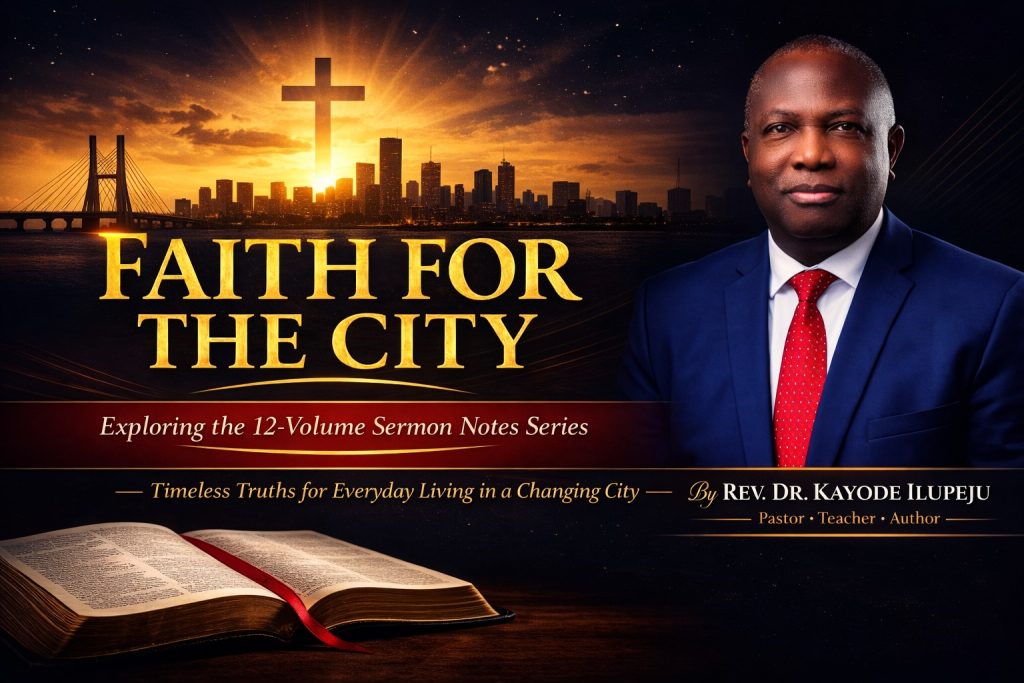
- This article is adapted from Foundations of the Christian Life (Volume 1) in the Sermon Notes Series by Rev. Dr. Kayode Ilupeju now on sale. Contact us for copies. Also available on Amazon


