
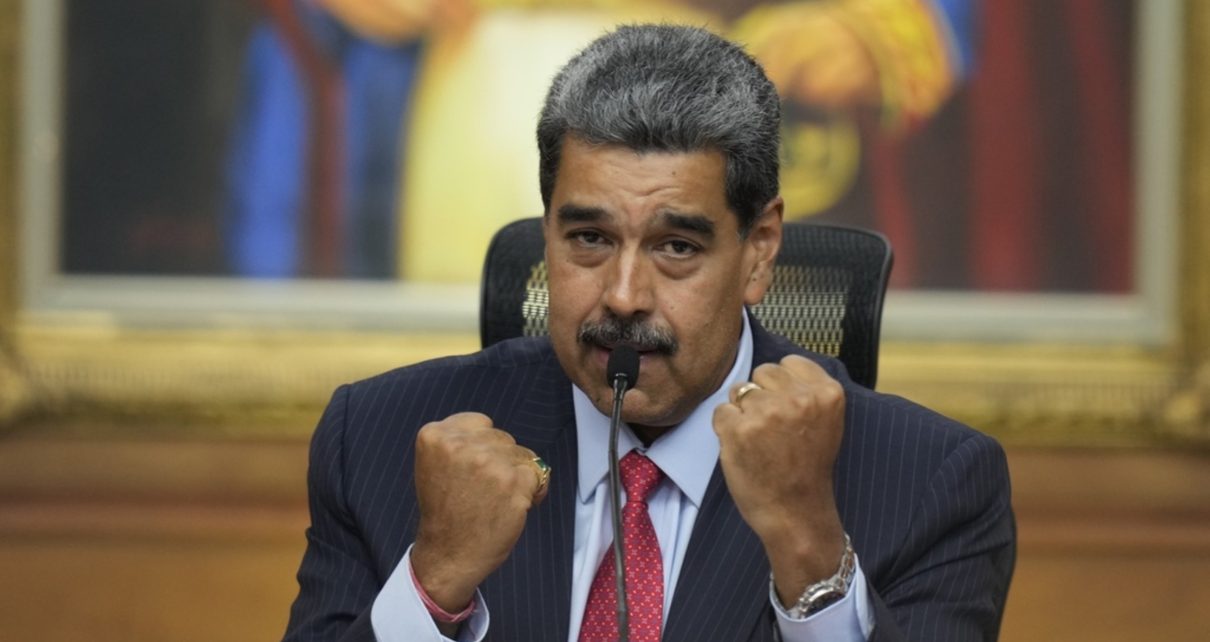
In a dramatic escalation of U.S. foreign policy, the White House has confirmed that Venezuelan President Nicolás Maduro is in American custody following a military operation in Caracas.
U.S. President Donald Trump announced the development early this morning, stating that Maduro and his wife, Cilia Flores, were extracted from Venezuela and are being transported to the United States. They are expected to face charges related to narco-terrorism indictments unsealed by the U.S. Department of Justice in 2020.
The Operation
While operational details remain sparse, reports indicate U.S. forces struck key military targets in the Venezuelan capital before dawn. Unlike previous attempts at destabilization which relied on internal dissent or proxy groups, this operation appears to have been a direct unilateral action by the U.S. military.
Venezuelan state media has characterized the event as a “kidnapping,” and the remaining government leadership in Caracas has declared a state of emergency. However, resistance from the Venezuelan armed forces appears to have been neutralized or bypassed during the extraction.
ANALYSIS: A New Precedent for Global Intervention
For international observers, the capture of a sitting head of state marks a definitive shift in the “Trump Doctrine” for his second term—moving from economic sanctions to direct “decapitation strikes.”
This event draws immediate parallels to the recent U.S. military activity in Northern Nigeria on Christmas Day, 2025. While the Nigerian operation was officially framed as a counter-terrorism partnership, the strike in Venezuela confirms that the current U.S. administration is willing to bypass traditional diplomatic norms to target regimes or individuals it deems hostile.
The View from Abuja
The extraction of Maduro presents a complex diplomatic challenge for Nigeria.
The U.S. State Department recently re-designated Nigeria as a “Country of Particular Concern” (CPC). With the precedent now set in Caracas, analysts in Lagos warn that the U.S. may feel emboldened to take more aggressive unilateral actions in West Africa if they perceive threats to their interests, regardless of sovereignty concerns.
While the Tinubu administration maintains a partnership with Washington, the aggressive nature of this operation will likely force a reassessment of Nigeria’s security agreements. There is a palpable concern that the definition of “sovereignty” is being rewritten, leaving nations in the Global South vulnerable to direct intervention.
Global & Economic Fallout
- Geopolitics: Traditional allies of Venezuela, including Russia and China, have issued statements condemning the action, raising tensions in the UN Security Council.
- Oil Markets: Global crude prices surged in early trading due to uncertainty over Venezuela’s vast oil reserves. This spike may have immediate contradictory effects on Nigeria—potentially boosting oil revenue in the short term, but increasing the landing cost of imported refined petroleum products, exacerbating domestic fuel scarcity.


