A Lagos Metropolitan News Analysis
Lagos has always lived with water. From the lagoon that defines its geography to the Atlantic that shapes its destiny, the city’s relationship with flooding is not new. What is new, however, is how the state is choosing to respond.
With its $7.5 million parametric flood insurance deal, the Lagos State Government is attempting a fundamental shift—from reactive disaster management to proactive financial resilience. It is a move that places Lagos among a small but growing group of cities using financial engineering, satellite technology, and global partnerships to hedge against climate risk.
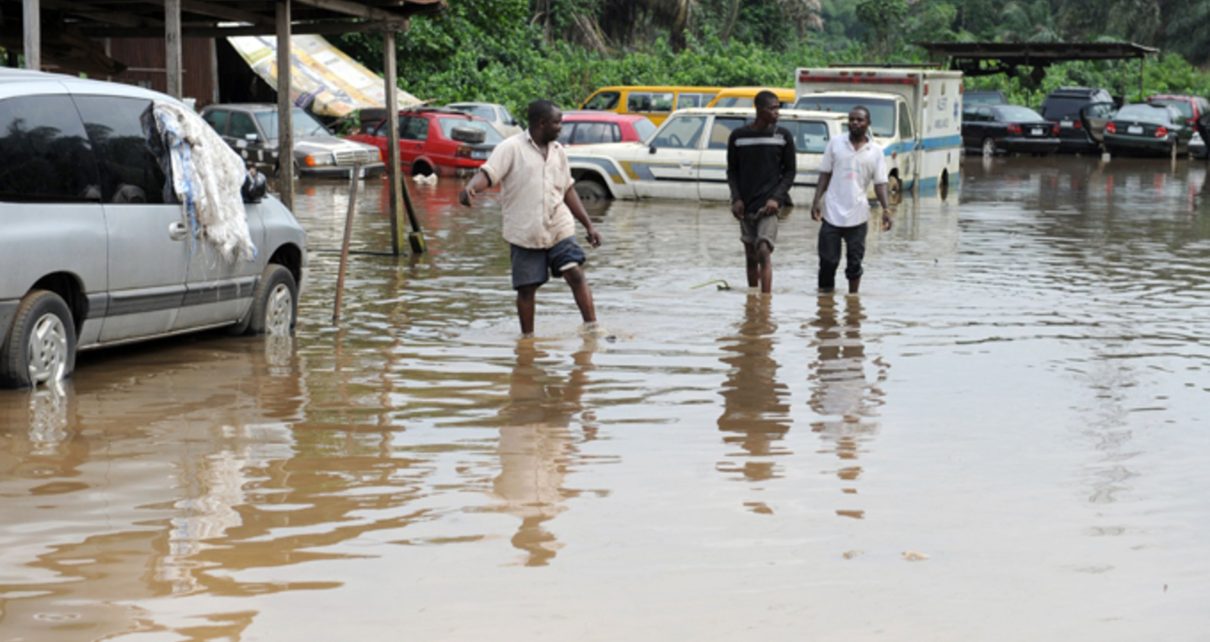
But beyond the headlines, what does this deal really mean—for policy, for governance, and for the ordinary Lagos resident navigating flooded streets in Ajegunle or Makoko?
This is where the real story lies.
From “After the Flood” to “Before the Storm”
For decades, disaster response in Lagos—and indeed across Nigeria—has followed a familiar script. Floods happen. Communities are submerged. Government agencies scramble for emergency funds. Relief materials arrive late, often unevenly distributed. Reconstruction drags on.
This model is expensive, inefficient, and politically fraught.
Parametric insurance disrupts that cycle.
Instead of waiting for damage assessments, payouts are triggered automatically when measurable environmental thresholds—such as rainfall intensity or water levels—are exceeded. In Lagos’ case, once floodwaters cross a 50cm threshold in designated zones, the system activates.
The implication is profound: money arrives not after bureaucratic verification, but almost immediately after the event.
In theory, this collapses the time between disaster and response—from months to days.
How the Lagos Model Works
At the heart of the deal is a tripartite structure involving government, international development partners, and global insurance players.
Key collaborators include organizations like United Nations Development Programme, AXA Climate, Swiss Re, and African Risk Capacity. Satellite intelligence from firms like ICEYE feeds into the system, while flood modelling expertise comes from JBA Risk Management.
Funding is equally strategic. The InsuResilience Solutions Fund covers 90% of the premium in the first year, with Lagos contributing the remaining 10%—a ratio expected to shift over time.
The design is targeted, not universal. About four million vulnerable residents across high-risk LGAs—including areas like Makoko, Ajegunle, Ikorodu, and Badagry—are the intended beneficiaries.
The payout ceiling is $7.5 million per event.
And importantly, the funds are not paid directly to individuals by default. They flow to the state, which then deploys them through emergency response systems such as Lagos State Emergency Management Agency (LASEMA) and structured cash transfer programmes.
The Strategic Logic: Climate as a Fiscal Risk
To understand why Lagos is embracing this model, one must look beyond flooding as a humanitarian issue and see it as a fiscal threat.
Climate projections suggest that without intervention, Lagos could face economic losses approaching $40 billion by 2050. For a subnational government, that is not just a disaster scenario—it is a budgetary crisis waiting to happen.
Floods don’t just destroy homes. They disrupt commerce, damage infrastructure, reduce productivity, and strain public finances.
In this context, parametric insurance functions as a financial shock absorber.
By transferring part of its climate risk to global insurers, Lagos protects its budget from being overwhelmed in a bad year. Instead of diverting funds from healthcare, education, or infrastructure, the state gains access to a dedicated liquidity pool for emergencies.
It is, in essence, a hedge against climate volatility.
Why This Deal Is Being Celebrated
There are strong reasons why policymakers and international observers are calling this a landmark move.
1. Speed Changes Everything
In disaster response, timing is critical. Delayed intervention often compounds losses—families fall deeper into poverty, small businesses collapse, and public trust erodes.
Parametric insurance addresses this directly. With payouts expected within 7–14 days, agencies can act while the crisis is still unfolding, not long after it has passed.
2. Reduced Political Discretion
Traditional disaster relief often raises questions: Who gets help? How much? Why this community and not another?
By relying on objective triggers—satellite data and measurable thresholds—the system reduces the room for political interference or bureaucratic delay.
This introduces a level of transparency that has been historically absent in disaster response.
3. Budget Protection
For a government already juggling competing demands, the ability to ring-fence disaster funding is significant.
Rather than scrambling for supplementary budgets or emergency borrowing, Lagos can access pre-arranged funds, preserving fiscal stability.
4. Investor Signalling
Deals involving global players like Swiss Re and AXA send a message to international investors: Lagos is serious about managing climate risk.
In an era where environmental risk increasingly influences capital flows, this could enhance the state’s attractiveness for investment.
The Critical Gaps: Where the Model Could Fail
For all its promise, parametric insurance is not a silver bullet. It comes with structural limitations that must be acknowledged.
1. The Problem of “Basis Risk”
This is the most significant technical flaw.
If floodwaters cause extensive damage but fail to cross the predefined 50cm threshold, the insurance will not pay out. Residents could suffer real losses without triggering compensation.
In a city with complex drainage patterns and micro-level flooding variations, this is not a hypothetical risk—it is a likely scenario.
2. The Ceiling Problem
$7.5 million sounds substantial. But in a megacity like Lagos, a major flood event could cause damage running into hundreds of millions—or even billions—of dollars.
In such cases, the insurance payout becomes a first response fund, not a comprehensive solution.
3. Long-Term Cost Burden
The current arrangement is heavily subsidised, with 90% of the premium covered externally.
But subsidies rarely last forever.
As Lagos gradually assumes full responsibility for the premium, the scheme becomes a recurring fiscal obligation. This raises critical questions:
- How sustainable is this model?
- Will it compete with other budget priorities?
- Could it lead to higher taxes or reallocation of funds?
4. Data Dependence and Technical Risk
The system relies on satellite monitoring and real-time data analytics.
Any disruption—whether from technical failure, data gaps, or delayed reporting—could compromise the accuracy or timing of payouts.
In a high-stakes environment, even minor glitches can have major consequences.
What This Means for the Lagos Resident
For the average Lagosian, especially in flood-prone communities, the implications are both promising and complex.
A Shift Toward Cash-Based Relief
One of the most transformative aspects of the scheme is the move toward direct cash transfers.
Instead of receiving standardized relief items—bags of rice, blankets, or mattresses—affected households may receive cash.
This allows families to prioritise their own needs:
- Repairing damaged homes
- Replacing lost goods
- Paying for healthcare
It introduces dignity and flexibility into disaster recovery.
Greater Transparency—and Expectations
Because the triggers are based on public data, residents and civil society can track when payouts should occur.
This creates a new layer of accountability.
If a payout is triggered and relief does not follow, questions can be asked—with evidence.
For platforms like Lagos Metropolitan, this opens a new frontier in data-driven accountability journalism.
Not a Personal Insurance Policy
It is crucial to understand that this is not individual insurance.
Residents cannot file claims.
The funds are managed by the state, which determines allocation through its disaster response framework.
This makes governance and transparency central to the scheme’s success.
Infrastructure Still Matters
Perhaps the most important point is this: insurance does not prevent floods.
It only mitigates financial consequences.
If drainage systems remain clogged, if urban planning continues to lag, and if informal settlements expand in high-risk zones, the physical experience of flooding will persist.
Insurance can cushion the blow—but it cannot stop the storm.
The Bigger Picture: A National Blueprint?
The Federal Government is reportedly watching the Lagos model closely, with interest in scaling similar schemes to states like Kogi, Delta, and Bayelsa.
If replicated effectively, parametric insurance could become a cornerstone of Nigeria’s climate adaptation strategy.
But replication will not be straightforward.
Each state has different risk profiles, governance capacities, and fiscal realities. What works in Lagos—a relatively high-capacity, revenue-generating state—may require significant adaptation elsewhere.
A New Social Contract?
At its core, this deal represents more than a financial instrument. It signals a shift in the relationship between government, risk, and citizens.
Traditionally, disaster response in Nigeria has been reactive and often opaque. Parametric insurance introduces elements of predictability, speed, and data-driven decision-making.
But it also raises expectations.
If the system works, residents will expect faster, fairer, and more transparent relief.
If it fails—whether due to basis risk, mismanagement, or delayed distribution—the backlash could be significant.
The Verdict: Innovation with Conditions
The $7.5 million parametric flood insurance deal is, without doubt, a bold and forward-looking initiative.
It aligns Lagos with global best practices in climate risk management. It introduces speed, objectivity, and financial discipline into disaster response. And it signals a willingness to innovate in the face of growing environmental threats.
But it is not a complete solution.
Its effectiveness will depend on three critical factors:
- Data Integrity – Accurate, reliable, and transparent trigger mechanisms
- Governance – Efficient and accountable distribution of funds
- Complementary Action – Continued investment in infrastructure and urban planning
Without these, the scheme risks becoming a sophisticated but limited safety net.
What It Means for You
For Lagos residents, especially those in flood-prone areas, this deal offers a measure of reassurance—but not immunity.
Help may come faster. Relief may be more flexible. Accountability may improve.
But the deeper challenges—urban planning, drainage, environmental management—remain.
In the end, parametric insurance is not the answer.
It is a tool.
And like all tools, its value depends on how well it is used.


