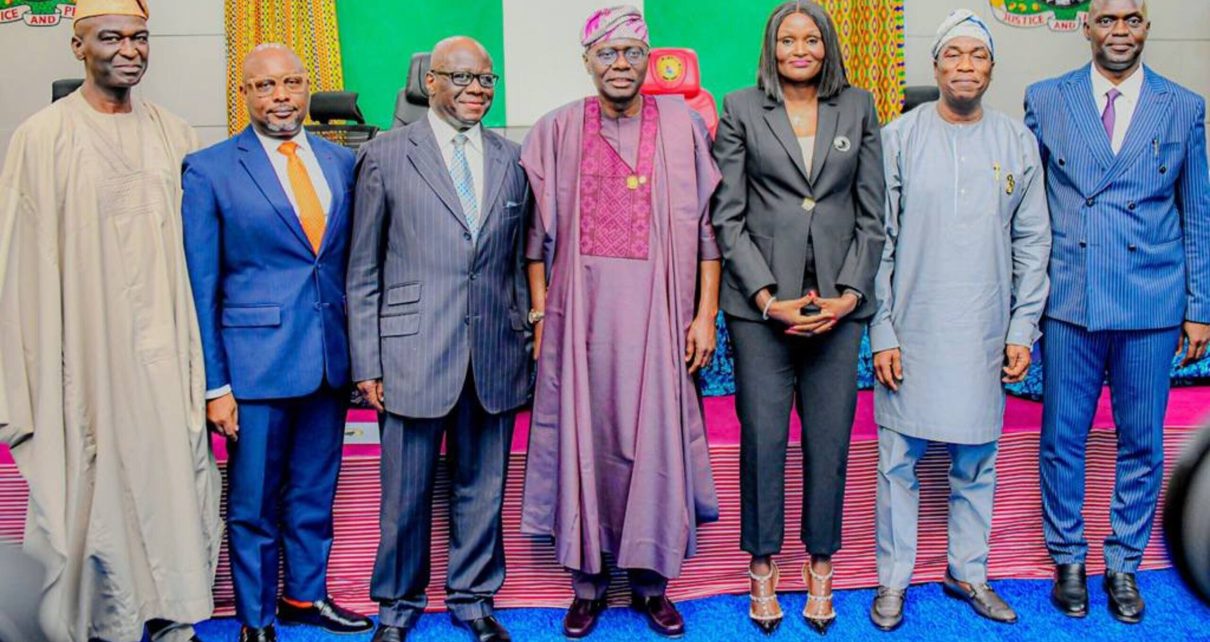
On Monday, March 9, 2026, at Lagos House in Ikeja, Governor Babajide Sanwo-Olu swore in the board of the Lagos State Electricity Regulatory Commission (LASERC), marking what many observers see as a turning point in the energy future of Nigeria’s largest city.
The ceremony itself lasted barely an hour. Yet its implications could reshape how electricity is generated, distributed and regulated across Africa’s fastest-growing megacity.
For decades, Lagos—home to more than 20 million people and the nerve centre of Nigeria’s economy—has depended on a fragile national electricity system largely controlled from Abuja. Repeated grid collapses, erratic supply, and estimated billing have become part of daily life.
The inauguration of LASERC signals Lagos’ determination to take a more direct role in solving that problem.
It is, in effect, the operational launch of the Lagos Electricity Market (LEM).
The Long Road to Power Autonomy
The March 2026 inauguration did not emerge overnight. It is the culmination of a multi-year legal and political process that gradually expanded the role of states in electricity governance.
Three milestones paved the way.
The first was the constitutional amendment of March 2023, which moved electricity from Nigeria’s exclusive legislative list to the concurrent list. This seemingly technical change allowed states to legislate and regulate electricity within their territories.
The second was the Electricity Act 2023, signed into law by President Bola Tinubu. The Act dismantled the old Electricity and Power Sector Reform framework and created a system where states could establish their own electricity markets and regulatory bodies.
The third milestone came when Lagos State passed the Lagos Electricity Law in December 2024, formally creating the Lagos State Electricity Regulatory Commission.
The Nigerian Electricity Regulatory Commission (NERC) subsequently issued transition orders transferring oversight of electricity activities carried out entirely within Lagos to the new state regulator.
With the inauguration of the LASERC board, the final administrative step has now been completed.
The Lagos Electricity Market is officially operational.
Lagos and the Power Deficit
The reform comes against the backdrop of a deep structural energy deficit.
Estimates of Lagos’ electricity demand vary depending on the methodology used. But most analyses agree that the megacity requires between 10,000MW and 12,000MW of electricity daily to power its homes, businesses and industries.
Actual supply has historically been far lower.
Depending on national grid conditions, Lagos typically receives between 2,000MW and 3,500MW—much of it unstable.
The result is a city powered largely by millions of private generators.
From small petrol generators humming in residential compounds to industrial diesel plants in factories, Lagos residents spend billions of naira annually generating their own electricity.
The economic cost is staggering.
Businesses cite power shortages as one of the biggest barriers to growth, while households face rising fuel costs simply to keep lights and appliances running.
Repeated national grid collapses—several recorded in 2024 and 2025—have further exposed the fragility of the existing system.
For Lagos, electricity reform is no longer merely a policy choice. It has become an economic necessity.
Meet the “Power Five”
To lead the transition, Governor Sanwo-Olu appointed a five-member board designed to project competence and credibility to investors.
The board includes:
Alexander Akinwunmi Ogunbiyi – Chairman
A veteran energy finance expert with over three decades of experience across Africa’s power sector.
Temitope George – Chief Executive Officer
A legal and regulatory governance specialist with deep experience in public policy and institutional development.
Engr. Adekunle Olabode Olopade – Executive Member (Engineering & Systems)
A power systems engineer involved in several national electricity infrastructure projects.
Olakunle Falola – Executive Member (Licensing & Compliance)
A professional with experience across gas infrastructure and power project development.
Bello Wasiu Oladimeji – Non-Executive Member (Distribution & Loss Management)
A specialist in revenue assurance, metering systems and distribution efficiency.
The composition of the board reflects Lagos’ intention to build a regulator driven by technocratic expertise rather than political patronage.
The Governor’s Message: Enable Investment
At the inauguration ceremony, Governor Sanwo-Olu delivered a clear message.
The regulator must facilitate investment—not frustrate it.
“A regulator should not be a stumbling block,” he said, “but an enabler that works with stakeholders to solve challenges and create a market where investment can thrive.”
The governor linked electricity reform directly to Lagos’ economic ambitions.
With a metropolitan economy estimated at over $250 billion in purchasing power parity terms, Lagos hopes to position itself as a 24-hour commercial city.
Reliable electricity is central to that vision.
Breaking the Distribution Monopoly
One of the most significant aspects of the Lagos Electricity Market is the potential restructuring of electricity distribution.
Historically, power distribution in Lagos has been dominated by two companies:
- Ikeja Electric
- Eko Electricity Distribution Company
Under the new regulatory framework, electricity distribution within the state can be reorganised through state-licensed entities operating under LASERC supervision.
In late 2025, LASERC issued distribution licences to companies designed to operate within the Lagos electricity ecosystem.
This move signals a gradual unbundling of legacy distribution structures, allowing the state to introduce new players and market models.
The goal is to create competition, reduce technical losses, and improve service delivery.
Embedded Generation and Mini-Grids
Another pillar of the Lagos strategy is embedded generation.
Unlike the traditional national grid model, embedded generation produces electricity close to where it is consumed.
This could include:
- gas-fired plants supplying industrial clusters
- solar mini-grids serving residential estates
- hybrid power systems for markets and commercial hubs
By generating electricity locally, these systems reduce reliance on long transmission lines and the national grid.
LASERC now has the authority to license such projects quickly, creating opportunities for private investment.
The State Electrification Fund
Electricity reform in Lagos is not intended solely for high-income districts or industrial corridors.
The Lagos State Electrification Fund, created under the Lagos Electricity Law, aims to support electrification projects in underserved communities.
These include:
- brownfield areas with inadequate infrastructure
- rapidly expanding peri-urban settlements
- rural communities on Lagos’ outer edges
Shortly after the LASERC board inauguration, Governor Sanwo-Olu commissioned electrification projects in several Badagry border communities, including rehabilitation of 33KV lines and installation of multiple transformer substations.
The projects serve both residents and cross-border commercial activity along the Lagos-Benin trade corridor.
What It Means for Lagosians
For the average Lagos resident, the immediate changes may not be dramatic.
Electricity reform is complex and takes time.
But several developments are expected in the coming years.
More Local Power Projects
Estate-level and industrial mini-grids could expand rapidly under state licensing.
Improved Accountability
Residents will have a local regulator empowered to investigate complaints against electricity providers.
More Investment in Power Infrastructure
Private investors are likely to explore embedded generation projects across the state.
Reduced Dependence on the National Grid
Over time, Lagos could generate a larger portion of its electricity internally.
The Caution: Reform Takes Time
Energy experts caution that the reforms will not immediately translate into cheaper electricity.
New generation plants, network upgrades, metering infrastructure and regulatory frameworks require heavy capital investment.
Reliability improvements often come before price reductions.
The success of the Lagos Electricity Market will depend on several factors:
- regulatory transparency
- investor confidence
- gas supply stability
- coordination with federal grid infrastructure
If these elements align, Lagos could become Nigeria’s model for subnational electricity reform.
A New Responsibility
Perhaps the biggest shift is psychological.
For decades, Lagos could blame electricity failures almost entirely on federal institutions and the national grid.
That era is ending.
With LASERC now operational, Lagos has assumed a greater share of responsibility for its electricity future.
The inauguration of the commission’s board marks the moment when the city moved from complaining about power shortages to actively redesigning the market that supplies its electricity.
For Africa’s largest megacity, the lights may finally be moving closer to home.


