
Aggressive early-morning enforcement signals a tougher sanitation regime—but raises questions about public toilets, poverty, and commuter disruption.
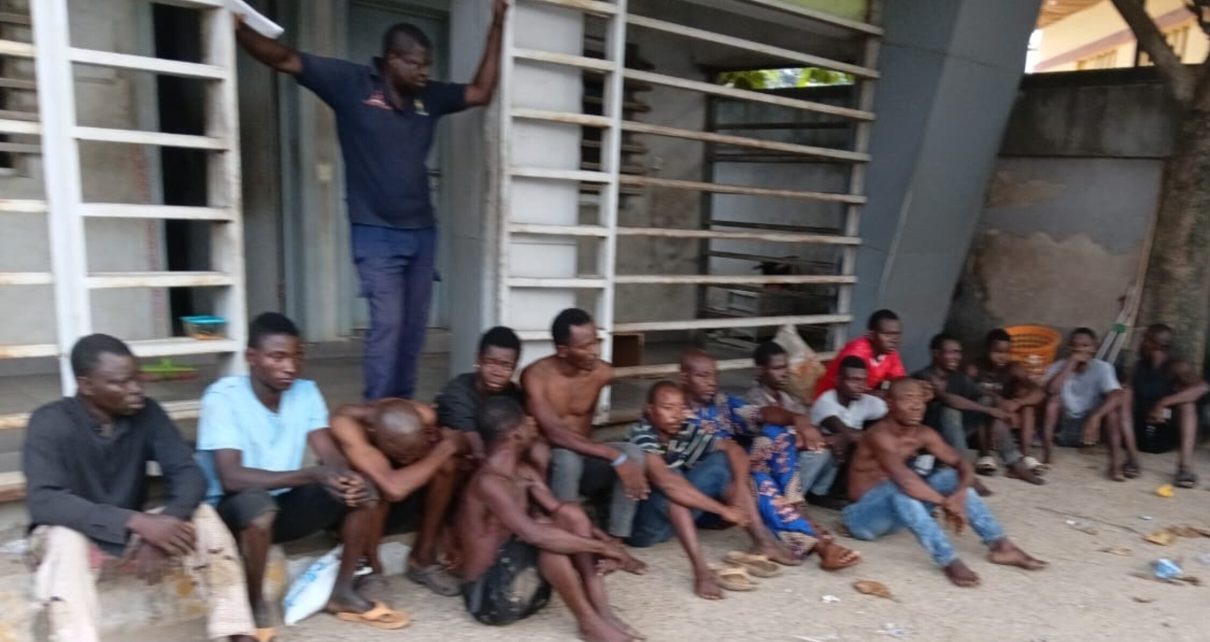
Lagos authorities have intensified their war against open defecation with coordinated early-morning patrols that led to the arrest of 275 people across the city within 24 hours, signalling what officials describe as a “clean slate” approach to sanitation enforcement.
But the scale and timing of the operation — conducted at 3:00 AM, 6:00 AM, and 7:00 AM — have sparked debate about whether the campaign is primarily about public health or whether it risks criminalising the urban poor who lack access to basic sanitation facilities.
For a megacity of more than 20 million residents, the crackdown exposes a deeper question: is Lagos enforcing sanitation faster than it is building the infrastructure needed to support it?
A “Three-Wave Patrol”
What stands out most in the operation is the deliberate timing.
Environmental enforcement teams reportedly carried out patrols in three distinct waves:
- 3:00 AM — targeting overnight sleepers and street dwellers
- 6:00 AM — intercepting early morning routines
- 7:00 AM — overlapping with the beginning of the commuter rush
Public health officials argue that open defecation is a major contributor to cholera outbreaks, contaminated groundwater, and environmental degradation, especially in coastal cities like Lagos where the water table is high.
But the timing suggests the operation is also strategically designed to catch offenders during predictable daily habits.
Urban policy analysts say this kind of enforcement is not unusual in cities trying to improve sanitation compliance.
Yet critics warn that without accessible public facilities, the campaign risks becoming a policing operation against the poorest residents of the city.
The Geographic Hotspots: Lagos Island, Berger, Oshodi
The arrests were concentrated in three major urban corridors that combine heavy human traffic with limited sanitation infrastructure.
Lagos Island — 70 arrests
Lagos Island recorded the highest number of arrests.
The area’s dense commercial activity — particularly night trading around major markets — means thousands of traders and porters remain active long after formal facilities close.
Public toilets are limited and often overcrowded, leaving many workers with few options.
Berger — 62 arrests
Berger, a critical entry point into Lagos from Ogun State, was the second most affected location.
Thousands of commuters, inter-state travellers, and transport workers pass through the area daily.
Officials privately admit that enforcement here also serves a symbolic purpose: maintaining Lagos’ reputation as a modern city for those entering through the gateway corridor.
Oshodi — 43 arrests
Oshodi’s modern transport interchange has transformed the skyline of the district.
Yet enforcement teams say the informal “under-bridge culture” around surrounding areas continues to present sanitation challenges.
Despite major infrastructure upgrades, the area still attracts street traders, informal workers, and homeless residents.
Public Health vs Human Rights
Authorities defend the crackdown as a necessary step to prevent disease outbreaks.
Open defecation has long been linked to:
- Cholera outbreaks
- Water contamination
- Flood-related sanitation crises
However, the sudden mass arrest of 275 people in a single day has raised questions about how those arrested will be processed.
In Lagos, sanitation offences are typically handled through Special Offences (Mobile) Courts, where offenders may face:
- Fines
- Community service
- Short custodial sentences for repeat offenders
For the poorest residents, however, even a modest fine can effectively become a prison sentence.
Civil society groups have repeatedly warned that sanitation enforcement without sanitation access risks turning poverty into a criminal offence.
A Looming Challenge for Commuters
The 7:00 AM patrol window may prove to be the most controversial aspect of the operation.
That time overlaps with the start of Lagos’ daily commute.
If enforcement teams remain active during peak hours, commuters could face:
- Increased traffic congestion
- Roadside enforcement delays
- Bus-park disruptions
In busy transit zones such as Berger and Oshodi, even minor roadside enforcement activity can ripple quickly into major traffic gridlock.
On the Ground Observations
In many Lagos transport hubs and markets, sanitation remains a daily struggle.
Night traders, bus drivers, and early-morning commuters often begin their day long before public facilities open.
At several major bus parks across the city, toilet access is limited or privately operated, with users sometimes required to pay a small fee per visit.
For workers who spend long hours in these spaces — particularly informal traders and transport workers — sanitation access remains inconsistent.
The Bigger Question: Infrastructure vs Enforcement
For years, Lagos has pursued an ambitious campaign to eliminate open defecation as part of broader environmental reforms.
But sanitation experts say enforcement alone cannot solve the problem.
Key challenges remain:
- Severe shortage of public toilets
- High population density
- Large informal economy operating outside formal facilities
In many transit areas, privately operated toilets charge ₦100–₦200 per use, which can be expensive for low-income workers who spend long hours in public spaces.
What It Means for You
1. Expect stronger sanitation enforcement
Early-morning patrols are likely to continue across major commercial hubs.
2. Commuters may see more Task Force presence
Particularly around Oshodi, Berger, and Lagos Island.
3. Businesses and traders may face stricter sanitation rules
Markets and transport parks may be required to provide adequate toilet facilities.
4. The debate over public toilets will intensify
As enforcement expands, pressure will mount on government to build more sanitation infrastructure.
Half a solution?
The crackdown shows that Lagos is serious about sanitation.
But enforcement is only half the solution.
For a megacity of over 20 million people, the real test is whether Lagos can build enough affordable public toilets to match its environmental ambitions.
Until then, the city’s war on open defecation risks becoming a battle fought mostly against those who simply have nowhere else to go.


