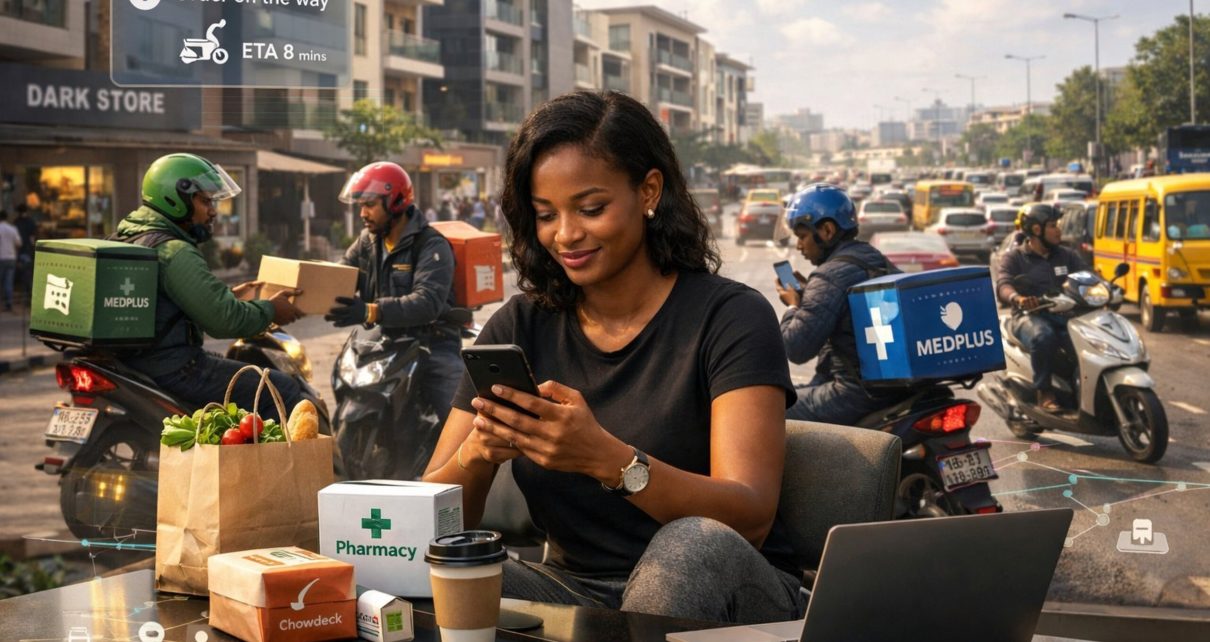
The convenience economy is an economic environment where consumer demand is driven primarily by the desire to save time and reduce effort. In this model, the “product” being sold is often the elimination of friction from daily tasks.
Rather than competing solely on price or quality, businesses in this space compete on accessibility and speed.
Key Characteristics
- On-Demand Access: Services are available 24/7, usually via smartphone apps. Think of ride-sharing, food delivery, or instant grocery apps.
- Removal of “Friction”: This refers to anything that slows down a transaction. Examples include one-click ordering, saved payment methods, and subscription models that automate repeat purchases.
- Hyper-Localization: Leveraging GPS and local hubs to ensure products reach the consumer in minutes or hours rather than days.
- The “Service-ification” of Tasks: Activities that people used to do themselves—like laundry, grocery shopping, or basic home maintenance—are outsourced to professional platforms.
Why It’s Growing
The shift is fueled by a combination of high smartphone penetration, urban density, and a cultural shift where time is increasingly viewed as a more valuable commodity than money. Businesses that fail to integrate “convenience” into their customer journey often find themselves losing market share to leaner, tech-driven competitors.
In Lekki, the convenience economy has shifted from a luxury for the elite to a structural necessity for the middle class. By 2026, the peninsula has become the primary testing ground for “Quick Commerce” (Q-Commerce) in Nigeria, driven by a unique combination of high smartphone penetration, extreme traffic congestion, and a dense population of remote professionals.
Here is how the landscape has transformed across three key sectors:
1. The Grocery Revolution: Beyond the Supermarket
The traditional weekly “big shop” at Spar or Shoprite is being replaced by hyper-local fulfillment.
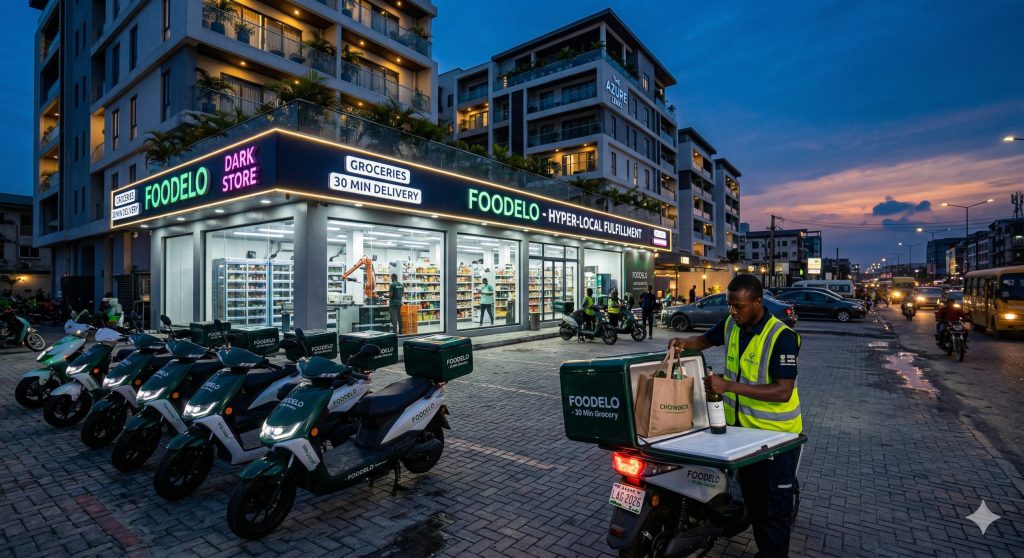
- The “Dark Store” Model: Companies like Chowdeck and Foodelo have moved beyond just food delivery into full-scale grocery logistics. They utilize “dark stores”—small, delivery-only warehouses tucked into residential pockets of Lekki Phase 1 and Agungi—to guarantee delivery in under 30 minutes.
- Micro-Niche Sourcing: Apps now allow residents to bundle items from different vendors. You can order fresh seafood from a local Lekki market, premium wine from a specialty shop, and imported snacks, all in a single interface.
- Social Commerce: A massive portion of Lekki’s grocery trade now happens via WhatsApp Micro-stores, where neighborhood vendors use automated bots to take orders and dispatch private bike riders.
2. Pharmaceuticals: On-Demand Wellness
Lekki has seen the fastest adoption of digital pharmacy services in Lagos, driven by a rising focus on “on-the-go” wellness.
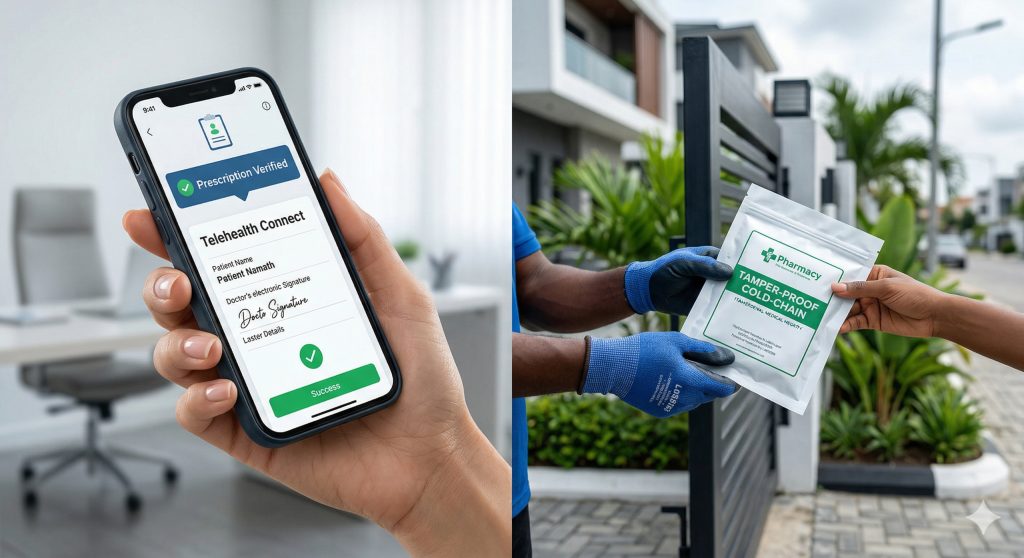
- Instant Prescription Filling: Platforms now integrate with Telehealth providers. After a virtual consultation, prescriptions are automatically routed to the nearest partner pharmacy (like HealthPlus or Medplus) and dispatched immediately.
- Discreet & Temperature-Controlled: For sensitive medications or temperature-dependent items like insulin, specialized logistics fleets with cold-chain storage are now standard, ensuring medical integrity during the “last mile” in the Lagos heat.
- Diagnostic Kits: There is a growing trend of ordering home-diagnostic kits (malaria tests, cholesterol checks) via delivery apps, reflecting a shift toward proactive health management.
3. Delivery Logistics: The Lekki “Last Mile”
The biggest challenge—and the biggest area of innovation—is getting goods through Lekki’s notorious traffic.
- The 20-Minute Guarantee: In 2026, “speed” is the primary differentiator. Logistics firms are optimizing routes using AI-driven demand forecasting to position riders before an order is even placed.
- Alternative Fleets: To bypass gridlock on the Lekki-Epe Expressway, there is an increased reliance on electric bikes and smaller, more agile scooters that can navigate narrow side streets and “shortcuts” more effectively than traditional vans.
- Subscription Logistics: Many Lekki residents now pay for monthly delivery “passes” (like Chowdeck’s loyalty programs) to waive individual delivery fees, effectively making the “delivery cost” a fixed utility bill rather than a variable expense.
The Benefits
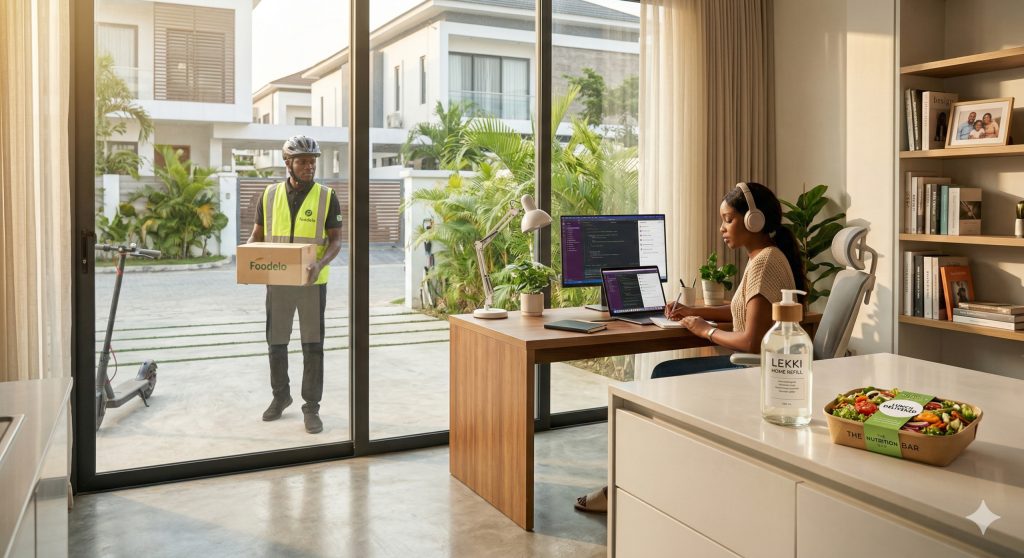
The benefits of the convenience economy are centered on the idea that time is the new currency. By 2026, this has evolved from simple delivery apps into a “frictionless ecosystem” that touches almost every part of professional and personal life.
1. Reclaiming Time and Mental Energy
The most significant benefit is the reduction of “cognitive load.”
Outsourcing Mundane Tasks: You can automate recurring chores—like grocery replenishment, laundry, or home maintenance—allowing you to focus on high-value activities or leisure.
Predictability: Real-time tracking and instant communication reduce the anxiety of waiting. Knowing exactly when a service provider will arrive allows for much tighter, more efficient scheduling.
2. Hyper-Personalization
Modern convenience services use data to tailor experiences to your specific needs without you having to ask.
Curated Choices: Instead of scrolling through hundreds of options, AI-driven platforms suggest the three most relevant choices based on your past behavior and current context.
Customization: Services are increasingly “build-your-own.” Whether it’s a specific meal plan or a modular home cleaning service, you get exactly what you need and nothing you don’t.
3. Economic Opportunities and Access
The convenience economy has lowered the barrier to entry for both consumers and service providers.
Access to Specialists: You can find highly niche experts (like specific types of artisanal makeup artists or specialized technical repairmen) who might have been invisible before digital platforms.
24/7 Availability: Services are no longer tethered to traditional “9-to-5” hours. This is a massive benefit for people with non-traditional work schedules or those in high-pressure roles.
Job Creation: The sector supports millions of roles—from the tech developers building the apps to the local technicians and drivers delivering the services.
4. Accessibility and Inclusion
For many, convenience isn’t just a luxury; it’s a necessity.
Support for Limited Mobility: On-demand delivery and home services are vital for those who may have difficulty leaving their homes due to health, age, or lack of transport.
Safety and Security: Features like secure digital payments, background-checked pros, and GPS tracking provide a level of safety that wasn’t always present in the traditional “analog” service economy.
5. Innovation and Quality
As competition in the convenience space heats up, businesses are forced to innovate to stay relevant.
Higher Standards: To justify service premiums, companies are investing in higher quality (e.g., fresher food, more professional equipment, better training for staff).
Sustainability Integration: By 2026, many convenience platforms are using “simplified sustainability”—optimizing delivery routes to reduce carbon footprints and offering eco-friendly packaging as a default.
The Tradeoffs
In the convenience economy, the trade-offs generally fall into three categories: personal, societal, and economic. While the “win” is almost always time, the costs are often hidden in the fine print of service fees and data sharing.
1. The Cost of Time (The Premium)
The most immediate trade-off is financial. In a convenience-led model, you aren’t just paying for the burger or the ride; you are paying for the logistics.
Service Fees: These can often increase the base cost of an item by 20% to 50%.
Surge Pricing: Algorithms can hike prices during peak demand (like rain or rush hour), meaning the “convenient” option is often the most expensive one.
2. Personal Privacy vs. Personalization
To make a service “frictionless,” a company needs to know your habits. This creates a loop where you trade your data for a smoother experience.
The Exchange: You provide your real-time location, credit card details, and purchase history.
The Result: The app can predict what you want before you even search for it, but this requires constant monitoring of your digital behavior.
3. The Gig Economy & Labor
Convenience is often powered by a massive fleet of independent contractors rather than full-time employees.
Flexibility vs. Security: Workers get to choose their own hours (flexibility), but they often lack traditional benefits like health insurance, paid leave, or job security.
Automation Risk: As these services grow, the long-term goal for many companies is to replace the human element with drones or self-driving vehicles to further reduce “friction.”
4. Societal & Environmental Impact
The shift toward “instant everything” has ripple effects on our physical environment.
Urban Congestion: A surge in delivery vehicles can lead to more traffic and higher carbon emissions in city centers.
Waste: Convenience often relies on single-use packaging to ensure products remain fresh and secure during transit.
The “Patience Gap”: On a psychological level, some experts argue that the convenience economy reduces our tolerance for waiting, which can lead to increased stress when things don’t happen instantly.

Final Thoughts
The “Lekki Paradox”
While convenience is booming, it has created a paradox: the more people rely on delivery to avoid traffic, the more delivery bikes contribute to the congestion. This is pushing the 2026 market toward Micro-Hubs—smaller, decentralised points of distribution that reduce the distance a rider has to travel, keeping the “convenience” truly convenient.
The convenience economy started by solving the problem of “I don’t want to go out.” In 2026, it has solved the problem of “I don’t have time to manage my life.” The challenge moving forward will be ensuring this efficiency remains inclusive and environmentally viable for the long term.
As we look at the trajectory of the convenience economy in 2026, it’s clear that this is no longer just about “getting things faster.” It is about a fundamental shift in how urban life is structured, especially in high-density hubs like Lekki and Ikeja.
Here are the final thematic takeaways for the future of this model:
1. From “App-First” to “Infrastructure-First”
The first wave of the convenience economy was defined by software (apps). The 2026 wave is defined by physical assets. Success now depends on who owns the “dark stores,” the cold-chain warehouses, and the electric bike fleets. In Lagos, real estate is pivoting toward “logistics-ready” commercial spaces rather than traditional office blocks, as businesses realize that being physically close to the customer is the only way to beat the traffic.
2. The Rise of “Invisible” Subscriptions
Convenience is moving toward a utility model. Just as you pay for electricity or water, consumers are increasingly paying flat monthly fees for “lifestyle logistics.” This includes:
Maintenance-as-a-Service: Subscriptions for recurring plumbing, pest control, and AC servicing.
Logistics Passes: Unlimited “free” deliveries that lock consumers into specific platform ecosystems (e.g., a single app for food, meds, and groceries).
3. The Circular Economy Pressure
The convenience economy has a massive “trash” problem—from single-use plastics to delivery emissions. By 2026, we are seeing the emergence of sustainable convenience.
Refill Models: Apps that deliver household liquids (detergents, oils) in reusable containers, picking up the empties on the next trip.
Electric Transition: In areas like Lekki, the noise and pollution of petrol bikes are driving a shift toward electric two-wheelers, which are cheaper to maintain and quieter for residential zones.
4. The Human Element: The “Trust” Premium
As AI and automation handle the logistics, human expertise becomes a luxury.
While an algorithm can deliver a package, it cannot replace the “art” of a professional MUA or the diagnostic intuition of a master plumber.
The winners in this economy will be those who use technology to handle the “boring” logistics (booking, payment, tracking) while allowing human professionals to focus entirely on their craft.
5. Hyper-Localisation vs. Mega-Cities
The convenience economy is effectively “shrinking” the city. By creating micro-hubs, residents can live, work, and shop within a 5-kilometre radius. This “15-minute city” concept is the ultimate end-goal of convenience—making the chaos of a mega-city like Lagos feel like a series of interconnected, highly efficient villages.
It’s an exciting time to watch these shifts happen, especially in a place as dynamic as Lagos.


