
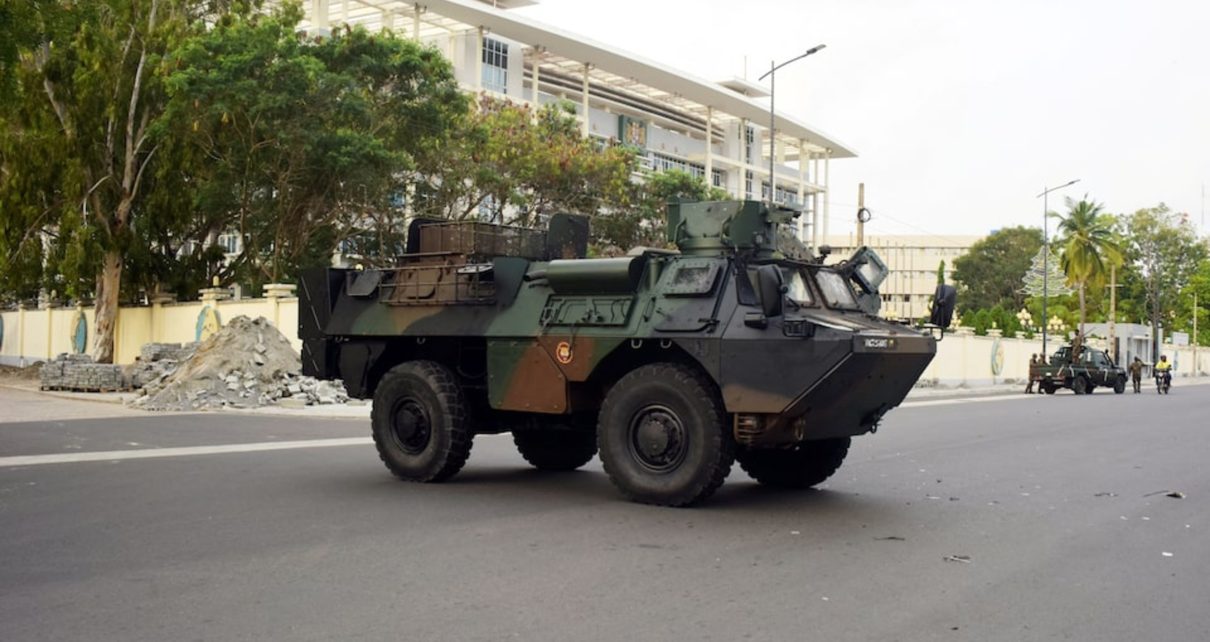
The diplomatic cold war that has simmered in West Africa for two years has effectively turned hot. In the span of 48 hours, the Nigerian government has moved from a doctrine of “strategic patience” to active military intervention, triggering a standoff that threatens to rupture the region’s security architecture entirely.
The events of this weekend—a failed coup in Benin Republic and the retaliatory detention of Nigerian soldiers in Burkina Faso—are not isolated incidents. They are the opening moves of a dangerous new phase in the struggle between ECOWAS and the Alliance of Sahel States (AES).
The Flashpoints
1. Cotonou: The Red Line On Sunday, December 7, elements of the Beninese armed forces attempted to seize power, seizing the state broadcaster and declaring the overthrow of President Patrice Talon. Unlike previous coups in the Sahel, this attempt was met with overwhelming force from Abuja.
President Bola Tinubu’s authorization of airstrikes and ground troop deployments to Benin marks the first aggressive enforcement of the “Zero Tolerance” policy since the Gambia intervention of 2017. The rationale is clear: Nigeria cannot afford a hostile junta on its western flank. With Niger already under military rule to the north, a successful coup in Benin would have completed an “encirclement” of Nigeria by the AES bloc, severing our vital coastal trade corridor and isolating us diplomatically.
2. Bobo-Dioulasso: The Hostage Crisis The response from the Sahelian junta bloc was swift. Less than 24 hours after Nigerian jets secured Cotonou, a Nigerian Air Force C-130 Hercules was forced to land in Burkina Faso. The Burkinabe junta’s detention of 11 Nigerian military personnel is not merely a procedural arrest; it is a diplomatic hostage situation.
While Abuja maintains the aircraft made an emergency landing due to technical distress, Ouagadougou has labeled it an “act of war” and a violation of sovereignty. This is a calculated signal: If you intervene in our sphere of influence (Benin), we will strike at your assets.
Strategic Analysis: The “Contagion” War
This is no longer just about democracy versus dictatorship; it is a struggle for survival between two competing geopolitical blocs.
The “Rear Base” Theory Intelligence reports suggesting that 8 Burkinabe nationals were arrested alongside the coup plotters in Benin provide the smoking gun Nigeria has feared. It suggests that the AES is no longer content with isolationism but is actively exporting its revolutionary model to coastal states. If Burkina Faso is indeed using its territory as a rear base to destabilize Benin, the insurgency in northern Benin is not just terrorism—it is state-sponsored hybrid warfare.
Nigeria’s “Big Brother” Dilemma For the Lagos Metropolitan reader, the economic implications are dire. The Nigerian intervention in Benin was necessary but costly. It signals to foreign investors that the Lagos-Cotonou corridor—the spine of West African trade—is now a militarized zone.
- The Risk: If Nigeria appears weak in negotiating the release of its soldiers, it loses credibility as the regional hegemon.
- The Trap: If Nigeria escalates militarily against Burkina Faso, it risks a wider conflict that our overstretched military—already battling bandits and insurgents at home—can ill afford.
The “emergency landing” in Burkina Faso was likely a message from the AES: Nigeria may control the coast, but the Sahel skies are closed.
We are witnessing the hardening of a new Iron Curtain in West Africa. On one side, the coastal democracies under Nigeria’s precarious umbrella; on the other, the Sahelian juntas backed by Russian security guarantees. The fate of the 11 soldiers in Bobo-Dioulasso will determine whether this curtain remains a diplomatic barrier or becomes a frontline.


