A Lagos Metropolitan News Explainer
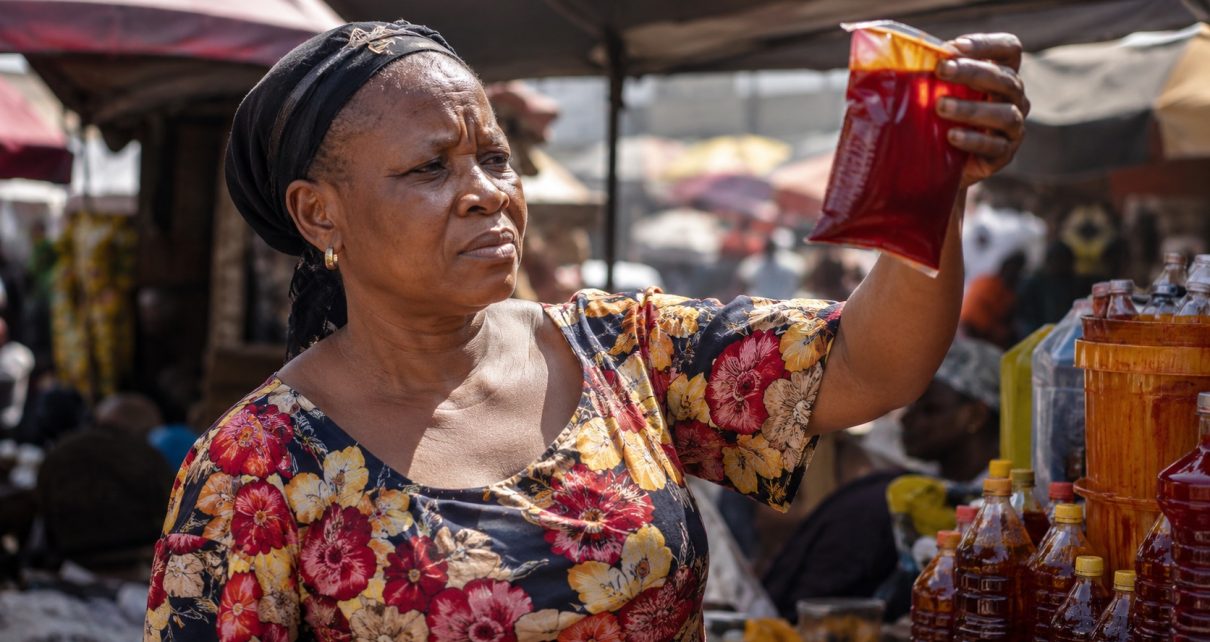
Picture a Sunday morning in Mushin. A woman haggling over palm oil at the open market, the way she has every week for twenty years. She checks the colour, smells the oil, pays what she can afford. She trusts her trader. She trusts her eye. This week, the Lagos State Consumer Protection Agency is asking her not to.
In the span of seven days, state authorities sounded four separate alarms touching the most intimate corners of Lagos life — the cooking pot, the body, the child sleeping at home, the shelter made from salvaged zinc. Taken alone, each story is a news item. Taken together, they form a portrait of a megacity managing overlapping crises with one hand while its most vulnerable residents absorb the consequences with both.
This is what happened. This is what it means. This is what you need to know.
1. What’s in Your Palm Oil?
Palm oil is not optional in Lagos. It is the base of egusi, the colour of stew, the economy of thousands of market women. Which is precisely why the alarm raised this week by the Lagos State Consumer Protection Agency (LASCOPA) landed so hard.
The agency confirmed that contaminated and artificially enhanced palm oil has been making its way into markets across the state — not in isolated pockets, but widely enough to trigger an urgent public warning. LASCOPA General Manager Afolabi Solebo was blunt about what investigators found: the adulterated oil may contain candle wax, industrial chemicals, synthetic dyes, and other impurities that the human body simply cannot process. The health consequences are not minor — food poisoning, stomach disorders, tissue damage, and liver complications top the list.
The motive is straightforward and ugly. Some traders are bulking up palm oil with cheap adulterants to stretch their margins, selling the result to buyers who have no laboratory and no reason to suspect the product in front of them.
LASCOPA moved quickly on enforcement, sealing a shop on Idutafa Lane off Oluwa Street near Amodu Tijani Oluwa Mosque on Lagos Island. Surveillance and consumer complaints led them there. The agency has warned traders in unambiguous terms: stop, or face sanctions under Lagos State consumer protection law.
What you should do: Purchase palm oil from verified and reputable sources. If something looks off — unusual colour, unexpected texture, a smell that does not match — do not buy it, and report it. LASCOPA’s official channels exist for exactly this purpose. Trust your instincts, but also know that sophisticated adulteration is designed precisely to deceive them.
2. The Lead You Cannot See or Smell
If the palm oil crisis is visible and immediate, the lead poisoning crisis is the opposite — invisible, slow, and far more insidious in its long-term damage.
The Lagos State Government and global health organisation Resolve to Save Lives (RTSL) this week wrapped up a three-day stakeholders’ workshop, the result of which will be a Lagos State Lead Prevention and Control Action Plan. The partnership targets one of the most preventable yet most consistently ignored environmental health threats in Nigerian cities: toxic lead exposure.
Lead does not announce itself. It accumulates. It enters the body through cosmetics — many skin-lightening creams and hair products carry lead levels far above safe limits. It seeps into water through old pipes and unsafe industrial runoff. It floats in the air around illegal battery recycling operations, which have been flagged as a specific concern in areas including Ikorodu, Alaba, and Ajegunle. Children and women of childbearing age are the most vulnerable, and the damage — reduced cognitive ability, stunted growth, cardiovascular disease, kidney failure — can be permanent even from low-level exposure.
Lagos was selected as one of just four pilot states for RTSL’s national lead poisoning prevention programme, alongside Kano, Kwara, and Nasarawa. The workshop drew officials from health, environment, consumer protection, and water management — a recognition that no single agency can tackle contamination that travels through multiple pathways simultaneously.
The first phase will focus on cosmetics before extending to other consumer products. Surveillance systems will be strengthened, public awareness campaigns will be intensified, and laboratories will be equipped to detect and trace contamination.
What you should do: Be cautious about cosmetics purchased from unregulated markets, particularly skin-lightening products. If you live or work near industrial zones handling batteries, scrap metal, or electronic waste, advocate for yourself and your family to be screened. The plan being developed will produce public resources — watch for them.
3. 1,437 Children. 5,708 Interventions. And a Ministry That Says It Is Only Getting Started.
Numbers in government press briefings are easy to scroll past. These ones deserve a pause.
At the 2026 Ministerial Press Briefing held at Alausa, Ikeja — marking the third year of Governor Babajide Sanwo-Olu’s second term — Commissioner for Youth and Social Development Mobolaji Ogunlende disclosed that the state’s Child Protection Unit handled 1,437 reported cases of child abuse, trafficking, abandonment, neglect, and other welfare violations during the reporting period. In response, the unit deployed more than 5,708 distinct child protection services: rescue operations, investigations, legal interventions, counselling, rehabilitation, placement services, and psychosocial support for children and families.
This is not a small operation quietly ticking over. It is a substantial welfare infrastructure being run at scale in a state of over 22 million people.
The commissioner was forthright about the philosophy guiding the ministry’s approach. Waiting for cases to go viral before intervening, he said, is an outdated way to govern. Instead, the ministry has built early warning networks inside communities — connecting schools, healthcare providers, religious and traditional institutions, and community development associations — to identify at-risk children before a crisis becomes a tragedy.
Honest questions remain. The figures cover a reporting period whose boundaries were not precisely defined at the briefing. What proportion of those 1,437 cases involve sexual violence versus neglect? How do this year’s numbers compare with previous years — and does the increase, if there is one, reflect more abuse, or better reporting? Are the 5,708 services resolved cases or ongoing ones? These are questions Lagos Metropolitan will continue to ask. What cannot be disputed is the scale of what is being attempted.
What you should do: Child abuse, neglect, and trafficking are not private family matters to be handled in silence. If you know of a child in danger, contact the Ministry of Youth and Social Development or a recognised child protection NGO in your area. Early reports save lives.
4. Cleared from Under the Bridge — And Sent Where, Exactly?
The fourth story this week does not have a clean resolution, and the government is not pretending otherwise.
The Lagos Waste Management Authority (LAWMA) enforcement team moved on illegal settlements beneath Ijora Bridge, clearing squatters the state described as perpetrating gross environmental violations. Commissioner for Environment Tokunbo Wahab framed it as a matter of principle and public interest: the law cannot be enforced only when it is convenient, and the health and safety risks posed by informal settlements beneath active infrastructure are real — flooding channels blocked by waste, open defecation, fire risks, criminal activity in poorly lit spaces.
These are legitimate concerns. They exist alongside equally legitimate ones on the other side of this story.
Human rights groups — including CAPPA, the Corporate Accountability and Public Participation Africa coalition — have been documenting what they describe as a sustained pattern of forced evictions targeting waterfront and informal communities across Lagos: Makoko, Oworonshoki, Otumara, Baba-Ijora, and others. They argue that communities facing demolition receive inadequate notice, no resettlement alternatives, and no compensation — and that the same state that demolishes their homes is the one that failed for decades to extend basic infrastructure, sanitation, and legal housing options to them in the first place. In February 2026, United Nations human rights experts weighed in, condemning the scale of demolitions and warning of a developing human rights crisis.
The government’s rebuttal is that public space cannot be permanently surrendered to informal occupation at the expense of 22 million people. Both positions contain truth. What neither position fully resolves is the most basic question facing every family cleared from Ijora this week: where do they go?
Evidence from Lagos’s own recent history is sobering. Periodic clearances of under-bridge and waterfront communities offer only temporary relief. Displaced residents typically return within weeks — not out of defiance, but because no viable alternative has been provided.
What you should do: If your community is under threat of demolition, document everything — dates, notices received, any communications from government agencies. Organisations like CAPPA and the Coalition Against Demolition, Forced Eviction, Land Grabbing, and Displacement are actively providing legal support to affected residents.
The Thread Running Through All Four Stories
Palm oil. Lead. Children. Evictions. These appear to be four separate stories. They are not.
Each one disproportionately harms the same populations: residents of dense urban neighbourhoods with limited purchasing power, limited access to formal healthcare, and limited legal recourse when the state gets something wrong. The woman who cannot afford to shop at a verified retailer is the one most exposed to adulterated cooking oil. The child in a neighbourhood near an illegal battery recycling yard absorbs more lead than a child in Ikoyi. The family under the bridge has no deposit for an apartment and no family land to return to upcountry.
Enforcement-first governance — seal the shop, clear the bridge, issue the ultimatum — is not inherently wrong. Standards must be upheld. Environments must be protected. But enforcement without the structural investment that makes compliance possible is a tax levied overwhelmingly on those least equipped to pay it.
What Lagos is managing this week are symptoms. The underlying conditions — inadequate food safety infrastructure along the supply chain, decades of lead exposure without a national elimination policy until very recently, a child welfare system under enormous caseload pressure, and a housing deficit that pushes hundreds of thousands into informal settlements — will not be resolved by any single agency action, however decisive.
The city is not standing still. The RTSL partnership is real. The child protection numbers represent genuine work. LASCOPA is in the markets. These are not nothing.
But Lagosians deserve to know not just what is being enforced today, but what is being built for tomorrow.
Quick Reference: What to Do This Week
| Concern | Action |
|---|---|
| Suspicious palm oil | Report to LASCOPA via official channels; avoid unverified market vendors |
| Lead exposure (cosmetics, environment) | Check labels; be cautious near e-waste and recycling zones; watch for RTSL public updates |
| Child in danger | Contact the Lagos Ministry of Youth and Social Development or a child protection NGO |
| Facing eviction | Document all notices; contact CAPPA or the Coalition Against Demolition for legal support |
Lagos Metropolitan will continue to track all four of these stories. Have information, a personal account, or data that should be part of this reporting? Contact our newsdesk.


